Homemade Reese’s Easter Eggs and Chocolates

I got this idea last year (after gasping at the price of both the grocery store’s and the candy shoppe’s peanut

Some of the eggs the kids and I decorated--I didn't use a mold for these

butter filled Easter eggs) to try and dip my own. I bought chocolate molds (cost about $2), poured a thin coat of tempered chocolate into them, filled them with the homemade Reese’s filling that I adore, and was quite pleased with the result. Placing them in the little cellophane bags from Michael’s (well, I really got mine at Dyan’s Sweet Tooth, but Michael’s and JoAnn’s would have them too), they looked suitable for the Easter baskets.

This year, I had too much peanut butter filling for just the molded chocolates that I made, so I decided to shape the remaining filling into egg shapes, and then dip them. Because I had some extra colored melting chocolate from another project, I melted it, and the kids and I decorated the eggs. I have to say, it was as enjoyable (if not just a little more) than decorating real hard-boiled eggs.

In addition to filling the molded chocolates with peanut butter, I also made a batch of homemade

Marshmallow-filled duck being propped up by a bunny--I used a mold for this

marshmallows. This was messier, but the result was worth it. Again, I put a coat of tempered chocolate (melt milk chocolate to 88 degrees, and then spoon it in the mold), and let it cool. Then, I made the marshmallows (Martha’s recipe is below), and after putting shortening on my fingers, I pulled the marshmallow out, and shaped it into the mold. I let the mold sit for 4 hours, then covered the back with more tempered chocolate. If you want to try it out, but don’t have molds, you could also cut the marshmallows into squares and dip them, or cut them into egg shapes with a cookie cutter. I also found that you can grease a chocolate mold, dust it with powdered sugar, and then fill it with marshmallow and make molded marshmallows (which I then dipped–the more chocolate the merrier). I would love to hear if anyone tries this, and what you ended up doing!

Martha’s Marshmallows

Makes 24

  • Vegetable oil, for brushing
  • 4 envelopes unflavored gelatin (3 tablespoons plus 1 1/2 teaspoons)
  • 3 cups granulated sugar
  • 1 1/4 cups light corn syrup
  • 1/4 teaspoon salt
  • 2 teaspoons pure vanilla extract
  • 1 1/2 cups confectioners’ sugar
  1. Brush a 9-by-13-inch glass baking dish with oil. Line with parchment, allowing a 2-inch overhang on the long sides. Brush parchment with oil; set aside.
  2. Put granulated sugar, corn syrup, salt, and 3/4 cup water into a medium saucepan. Bring to a boil over high heat, stirring to dissolve sugar. [My note: Place the sugar in the saucepan last, right in the middle. Stir gently so the sugar doesn’t hit the sides of the plan, and once the sugar is dissolved, brush around the sides of the pan with a pastry brush dipped in water to make sure all the water crystals have been wiped down and dissolved.] Cook, without stirring, until mixture registers 238 degrees.on a candy thermometer, about 9 minutes.
  3. Meanwhile, put 3/4 cup cold water into the bowl of an electric mixer; sprinkle with gelatin. Let soften 5 minutes.
  4. Attach bowl with gelatin to mixer fitted with the whisk attachment. With mixer on low speed, beat hot syrup into gelatin mixture. Gradually raise speed to high; beat until mixture is very stiff, about 12 minutes. Beat in vanilla. Pour into prepared dish, and smooth with an offset spatula. Set aside, uncovered, until firm, about 3 hours.
  5. Sift 1 cup confectioners’ sugar onto a work surface. Unmold marshmallow onto confectioners’ sugar; remove parchment. Lightly brush a sharp knife with oil, then cut marshmallow into 2-inch squares. Sift remaining 1/2 cup confectioners’ sugar into a small bowl, and roll each marshmallow in the sugar to coat. Marshmallows can be stored in an airtight container up to 3 days.

Confession: I actually haven’t used this recipe of Martha’s before–the one I’ve used calls for 2 T. of vanilla, and yield is a little lower. I didn’t like how strong the vanilla was, so this last batch, I lowered it to 2 t., which I liked a lot more. If you look on Martha’s website, there are lots of variations–including one that uses a vanilla bean. They are all essentially similar, though, but you may find you prefer more/less sugar, vanilla, etc.

Broiled Lemon Caper Mahi Mahi

I’ve been branching out with our fish choices and recently tried mahi mahi, which is kind of a bland fish.  The good news about a bland fish is that you can dress it up to taste fabulous.  This recipe is a slight variation on Grilled Mahi Mahi with Lemons and Capers from Kalyn’s Kitchen, my other favorite recipe blog.

Mahi Mahi filets, one per person
Marinade:
3 T fresh squeezed lemon juice
1 tsp. Dijon mustard
1/4 cup extra virgin olive oil
2 T capers (I LOVE capers)
2 cloves garlic, minced
1 tsp. dried parsley
1/2 tsp fresh ground black pepper

Mix marinade ingredients well. Put Mahi Mahi filets into ziploc bag, pour marinade over, and allow to marinate 2-3 hours. (Don’t leave it longer than that for best results.)
Preheat broiler.  Place mahi mahi filets in broiler and pour the marinade and capers from the bag on top.  Broil for about 10 minutes, or until filets start browning.

Rosemary Focaccia Bread

This is a terrific addition to any meal, especially Italian. This recipe comes from the New Best Recipe, although I’ve adapted it to use potato flakes (I have quite a few of those on hand). The result is terrific–very moist and flavorful. You can also experiment with different toppings: sliced olives, sundried tomatoes, different herb assortments, parmesan cheese, etc. It’s definitely a repeater!

Rosemary Focaccia Bread with Olive Oil

3 1/2 c. flour (can substitute up to 1 1/2 c. with whole wheat flour)
1 c. warm water
1 1/2 t. yeast
1 1/2 t. salt
1 c. mashed potatoes (either from flakes or previously cooked and mashed)
2 T. olive oil plus more for the pans

In a standing mixer or small bowl, combine 1/2 c. flour, 1/2 c. water and the yeast. Cover tightly with plastic and let stand for 20 minutes. Add the rest of the ingredients, stirring on the low setting, and then, with the paddle attachment, knead for 5 minutes, until the dough comes together and is smooth.

Transfer the dough to a well-oiled bowl, cover with plastic wrap and let stand for one hour, until puffy and doubled. Meanwhile, prepare a 10 x 15″ rimmed cookie sheet pan by generously greasing it with oil (alternately, you can place the dough on a larger pan and stretch it to app. 10 x 15″). With wet hands (the dough will be sticky), turn the dough onto the cookie sheet. Spread it as well as you can (you may have to let it rest 15 minutes, covered, and then stretch it some more), and then cover it again with plastic wrap and let double, about 45-60 minutes.

Twenty minutes before baking, preheat your oven to 425 degrees. Right before baking, with wet fingers, makes dents in the dough to hold olive oil and herbs (you can use the tips of your pointer and middle finger). Then drizzle olive oil and fresh rosemary on top of the bread (or any other fresh herb, or parmesan cheese, or olives or sundried tomatoes, etc.) and sprinkle with coarse salt, to your taste.  Bake for 23-25 minutes, until the bread is browned.

Serve warm from the oven.

Brussels Sprouts 2

After several suggestions from people who all gave practically the same advice, I realized the secret to brussels sprouts is to make them the same way as I make the best broccoli in the world.   That recipe works for everything!  Well, almost everything.  Not radishes.  But then I think roasted radishes may have been a misdirected vision on my part.

My one tip is to cut the brussels sprouts in half and cook them with the open side facing down for the first 10 minutes or so, then turn them to open side up for the last 10-15 minutes.

Update on Multigrain Bread

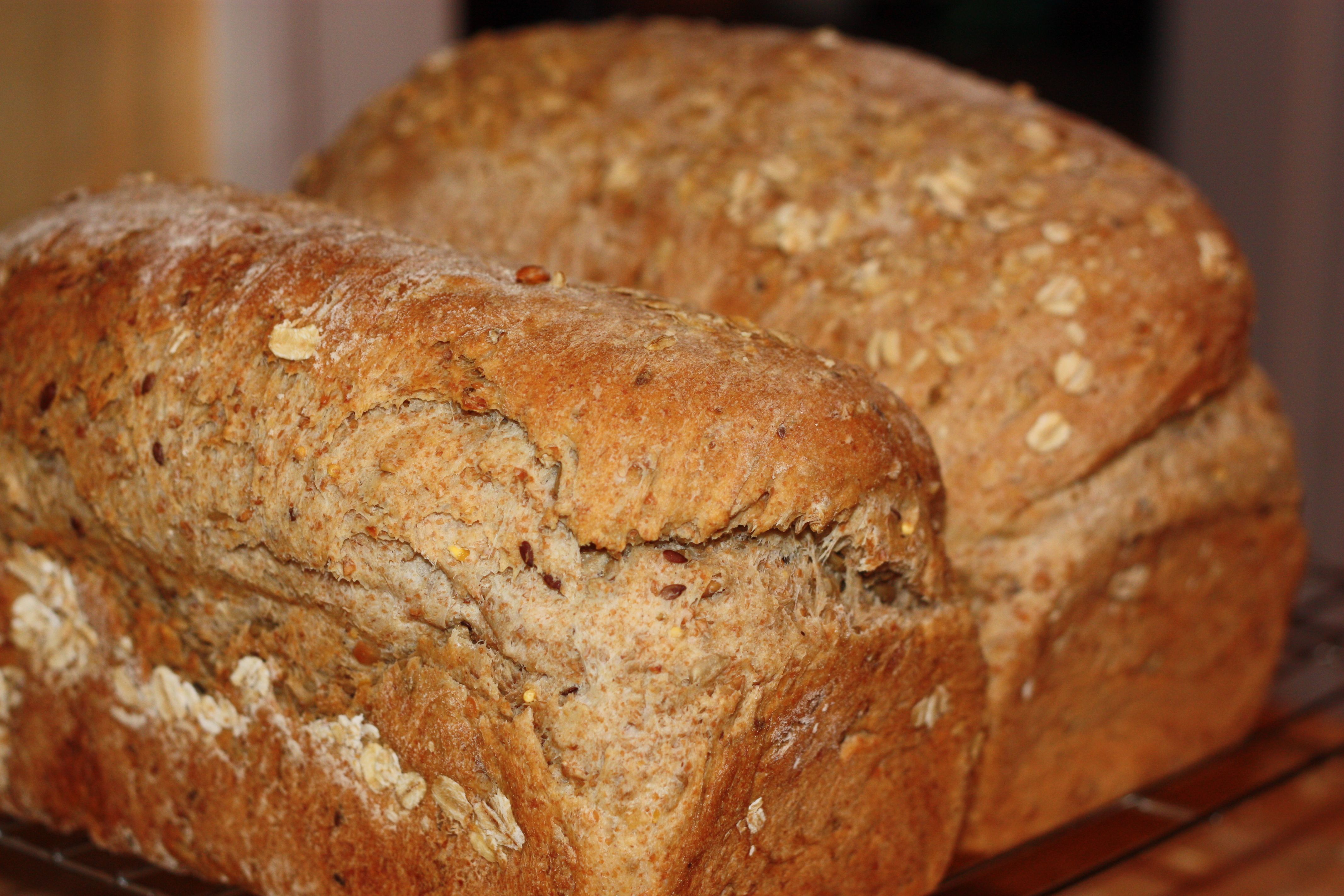
Thanks to a terrific Christmas gift from my husband, I’m now able to update and add some pictures to former posts. I love this multigrain

Multigrain Bread

bread; it’s our daily sandwich bread, and I find myself talking to others about it so frequently that I thought I’d add this picture to an earlier post.

As I’ve continued to make this bread, I’ve decided to make a change to the original recipe: I double the recipe and then bake it up into 3 loaves, rather than four. The same thing can be accomplished by 1 1/2 x’s the recipe, and then only baking 2 loaves, instead of what the recipe suggests should make three. Otherwise, the loaves turn out small. But, making many loaves of this bread is not a problem if your mixer can handle it: this recipe freezes beautifully.

Multigrain Bread from America’s Test Kitchen

Cherry Cheesecake Brownies

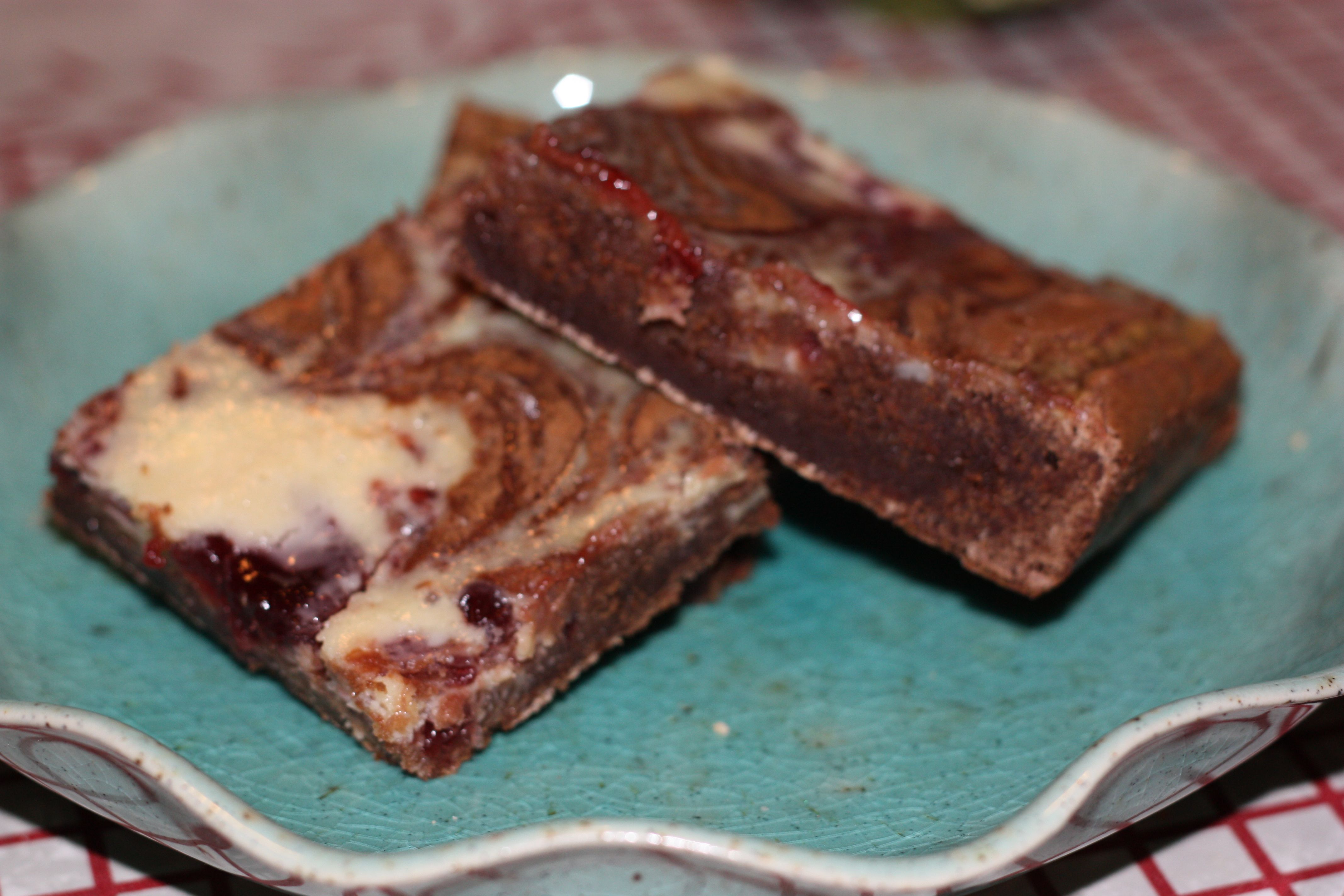
I was looking at Cooking Light and saw a recipe for Raspberry Cheesecake Brownies (click here if you want it), when I was inspired to

Fudgy, delectable things

create my own variation, using my favorite brownie recipe and my favorite flavor, almond extract (and also because sometimes I can’t be bothered with all the accommodations in making a baking recipe “light”). So, I came up with this, and I’m already a little addicted to it (meaning I’ve made it twice in the last week). I thought there may be someone else out there who would love this combo as much as I do. Note: these are not cakey brownies at all–they are quite dense and fudgy.

Cherry Cheesecake Brownies

4 oz. unsweetened chocolate, chopped
8 T. unsalted butter
2 c. sugar
2 t. vanilla
3 large eggs, at room temperature
1 c. flour
1 c. walnuts or pecans (optional, of course)
Cheesecake Filling
8 oz cream cheese (or neuchatel, if you prefer), softened
1/3 c. sugar
1 egg, at room temperature
1 t. almond extract (or vanilla extract, if you aren’t using cherries)
1/4 c. marashino cherries, chopped, or your favorite preserve (raspberry, cherry, strawberry, caramel sundae topping, whatever!)

Preheat oven to 350. Line a 9 x 13 baking pan with nonstick aluminum foil (a great choice for this recipe), or greased aluminum foil, allowing the foil to hang over the pan by 2″ on the sides (so that you can pull the brownies out easily).

In a large saucepan over low heat, melt the chocolate and the butter until smooth and combined. Take off heat and allow to cool.

While the chocolate mixture cools, make the cheesecake filling. Combine the cream cheese, 1/3 c. sugar, egg, and extract in a mixing bowl (it’s important to have the cream cheese and egg at room temperature, or the mixture will curdle. You can warm cream cheese in a microwave, sans the wrapper, of course, and you can warm an uncracked egg in a bowl of warm water). Whip at high speed until combined, and no lumps remain.

When chocolate mixture has cooled, stir in the 2 c. sugar and vanilla, followed by the eggs, one at a time. Add the flour and nuts, if using, and scrape the batter into the prepared pan. Then, dollop the cream cheese mixture over the brownies, at various intervals and sprinkle the chopped cherries (or dollop on the jam) around the pan. With a butter knife, swirl the mixture by making ribbon-candy waves one direction in the pan, then turn the pan, and make the waves the other direction. Swirl until your satisfied with the design:) Cook the brownies in the preheated oven for 25-30 minutes, or until a toothpick comes out with just a couple of crumbs. Place the pan on a rack to cool, and then remove the brownies with the aluminum-foil handles. Refrigerate the extras (they’re even better the second day–more fudgy!) Let me know if you like these!

Pad Thai (Thai Noodles)

I have recently attended several fabulous Chinese cuisine classes at Orson Gygi in Salt Lake and this recipe will change your life. The instructor is Meiling Dawson who’s mantra is the fresher your ingredients the better your result.

Happy Cooking!

(Almost all these ingredients you can find at your local supermarket. For fresh rice noodles, Fish Sauce (the clearer the better) and the Red Chili Paste, I go to an asian market. And just an FYI, I always double it and have used no meat, shrimp, chicken, and tofu. My own personal comments are in italics. Everything else is Meiling.)

Pad Thai (Thai Noodles)

7 oz. dried rice stick noodles (you can also used fresh), 5 mm wide

4 T. Canola oil (when I double it, I don’t double this)

1 clove garlic, minced

1 LB. raw shrimp, 21/25

2 eggs, beaten

2 green onions, cut into 2″ lengths

1 C. bean sprouts

Sauce

1/4 Cup Fish Sauce

1/4 Cup Sugar

1 T Paprika

2 T Soy Sauce

1 T Vinegar

1/4 Cup Water (1/2 if using dried noodles)

1/2 T Red Chili Paste, optional (I use Sambal Oelek brand)

1/4 Cup Roasted Peanuts, chopped

Soak dry rice noodle in warm water for an hour or until soft. Heat the wok until hot, add the oil, garlic, and shrimp; Cook until shrimp are turning pink about 3 minutes. Reduce the heat to medium. Add the drained noodles and beaten eggs to the shrimp mixture. Stir fry until the noodles are soft, then add sauce, bean sprouts, and green onion. (Sometimes I remove the shrimp while I cook the noodles so they are not over done, adding them after the noodles are ready before I add the sauce, bean sprouts, and green onion.) Combine thoroughly, heat through (I find the sauce cools things off dramatically so it needs to be heated back up. I also like to cook off some of the liquid so it isn’t too runny) and transfer to serving plate. Sprinkle top with chopped peanuts.

So Good!!!!

Recipes for Indian Food

My little sister requested any great recipes I had for Indian food. I’ve discovered that I’m most apt to go out if I really want good food, but the couple recipes I have (and like) are to follow. If anyone else has good ones, please add them!

Indian-Spiced Braised Chicken

1 1/2 lbs. boneless, skinless chicken thighs
1 medium onion, halved and thinly sliced
1 can (14.5 oz.) diced tomatoes, drained
2 T. tomato paste
1 T. grated fresh ginger
2 garlic cloves, minced
1/2 t. ground coriander
1/4 t, cayenne pepper
coarse salt and ground pepper
1/2 c. plain yogurt
1/2 c. chopped fresh cilantro
1/2 t. garam masala
cooked white rice, for serving

In a 5-6 qt. slow cooker, stire together the chicken, onion, tomatoes, tomato paste, ginger, garlic, coriander, and cayenne; season with salt and pepper.

Cook on high 4 hours (or on low for 8 hours) until fork-tender. Stir in yogurt, cliantro, and if using, garam masala. Serve with rice.

[You can also make this in the oven by heating the oven to 350, placing the ingredients through the pepper in a heavy pot with 2 c. of water and baking for 2 hours. When finished, stir in the final ingredients.]

Note: This is one of my favorite made-at-home Indian recipes and I’ve had good luck with it. It originally came out of Everyday Food back in 2007. Rex declared it most like a restaurant of anything I’ve tried in the Indian food category.

Curried Lentils in Tomato Sauce (click on this title to go to the recipe)

This is a recipe I posted awhile back that I think is fantastic too. Not sure you would find it on the menu of an Indian Restaurant, but also good for what’s possible at home!


Chicken Curry

  • 2 tablespoons all-purpose flour
  • 4 skinless, boneless chicken breast halves (6 ounces each)
  • 1 tablespoon plus 2 teaspoons olive oil
  • 1 medium onion, finely chopped (3/4 cup)
  • 2 cloves garlic, minced
  • 2 teaspoons medium to hot curry powder
  • Coarse salt
  • 3/4 pound small red potatoes, cut into 1/2-inch chunks
  • 1 can (14 1/2 ounces) diced tomatoes (preferably zesty flavored), with juice

Directions

  1. Place flour on a plate. Dredge chicken in flour, shaking off excess. In a large nonstick skillet, heat 1 tablespoon oil over medium heat. Add chicken, and cook until golden brown, about 3 minutes per side. Transfer chicken to a bowl; set aside.
  2. Heat remaining 2 teaspoons oil in same skillet; cook onion and garlic, stirring frequently, until onion is softened, about 5 minutes. Stir in curry powder and 3/4 teaspoon salt; cook 1 minute more.
  3. Add potatoes and 1 cup water; bring to a boil. Reduce heat to a simmer; cover, and cook until potatoes are just tender but still offer slight resistance when pierced with the tip of a paring knife, about 7 minutes. Stir in tomatoes and 1/4 cup water.
  4. Return chicken to skillet along with any accumulated juices in bowl; simmer, covered, until chicken is cooked through, 12 to 15 minutes.

Note: This recipe is from Great Food Fast, and it’s a nice, simple curry. As with any curry, though, its success depends on the curry powder you use. America’s Test Kitchen recently recommended McCormick Select Curries, which I’ve tried and liked. I’ve also had plenty of store-brand curries that are pretty bland, so I think it’s worth the extra $1-2 to get a good spice blend, or make your own.


Bombay House’s Vegetable Coconut Kurma

from
S.L. Tribune or Deseret News, courtesy of Ricky and Carie Allman

1 large onion, finely chopped
3 garlic cloves, finely chopped
1 in. piece ginger, finely grated
3 T. oil
1 1/2 t. Madras Curry Powder
1/2 t. cayenne pepper (or more, if desired)
1 t. salt or to taste
2 large tomatoes, finely chopped
1 1/2 lbs. mixed vegetables (cauliflower, carrots, peas, potatoes, or others), chopped
1 c. water
1 c. coconut milk
2 T. broken cashews
2 T. golden raisins
1 T. chopped cilantro for garnish

Blend half the onions, garlic and ginger in a food processor to make a paste. Heat oil in a sauce pan and add the remaining chopped onions, sauteing until they turn golden brown. Add remaining garlic, ginger and onion paste. Fry until the raw smell goes away. Add curry powder, cayenne and salt. Stir well. Add chopped tomatoes and cook for 5 minutes and then add the mixed vegetables and water. Cook for 5 more minutes and then add coconut milk. Cook over medium heat, stirring occasionally, until the vegetables are cooked. Add cashews and golden raisins and garnish with cilantro. Serve over steamed rice.

Makes 4 servings.

Note: I’ve loved this recipe, although it’s never turned out quite like Provo’s Bombay House. Still, it’s good. Again, the highlights of this dish are the garam masala used and the raisins and cashews. Without these three, it’s not nearly as good. It’s also really important to caramelize the onions, but not to let them burn. According to one recipe book I read, a curry depends entirely on how well the onions are caramelized.

Naan, Peshawri (click on title for the link)

I found this website a couple of years ago, and this naan bread worked perfectly. I was amazed. I stuffed it with chopped cashews, raisins, cardamom and some cinnamon and coconut to replicate my favorite restaurant peshwari. Although I haven’t tried making anything else on the website, judging from how well this recipe turned out, I wouldn’t hesitate to try. It looks really comprehensive.

Mango Lassi

3 c. chopped fresh mango (not frozen, or it will taste flat) from 2-3 mangoes
2 c. plain whole milk yogurt
1 c. ice water, about half water, half ice
2-4 t. honey (depending on how sweet the mangoes are)
2 t. lime juice from 1 lime
1/8 t. salt

Puree all the ingredients together in a blender until there are no visible chunks of mango, about 1 minute. Strain the mixture through a fine-mesh strainer into a pitcher, pressing on the solids to extract as muhc liquid as possible; discard any solids left in the strainer. Serve in chilled glasses (You can refrigerate the drink for up to 4 hours, but will want to reblend it before serving).

Note: This recipe is from The Best International Recipe. I have to admit I have not yet made it, but plan to as soon as I buy some mangoes, because I love this stuff.

So, I also have a great, but involved, Saag Paneer recipe that I will post if I hear someone’s interested. I am also inspired to try several other recipes I haven’t yet tried to see what other good Indian food can be made at home. I’ll let you know!

Recipe Request: Brussels Sprouts

A couple of months ago I had a divine meal at our favorite French restaurant that included a side of brussels sprouts in a yummy, slightly fruity glaze.  Since then, I’ve been intrigued with finding good brussels sprouts recipes.  I don’t have any bad childhood memory baggage associated with them, like I know a lot of people do.  Plus, I think they’re kind of cute.  Wee little cabbages.

Last night I tried a recipe for Balsamic Glazed Brussels Sprouts.  What could be better, right?  Jason and I summed them up with a big, “Meh.”  They weren’t awful, but I don’t feel the need to ever make them again.

So does anyone have a good brussels sprouts recipe?

(I’m also posting this on my personal blog, in case you feel like you’re reading the same thing again.  You are.)

Southern Pecan Praline Pie

This was my new favorite recipe from Thanksgiving. Thankfully, many guests were more interested in the cream and lemon pies more than this one, leaving this heavenly thing to just a few hands. I’m resisting making it again until Christmas, because I know I would eat it all in one sitting, but this is a really great recipe. I’ve taken it from America’s Test Kitchen’s 2007 Annual.

Southern Pecan Praline Pie

Crust
1 1/4 c. flour
2 T. dark brown sugar
1/2 t. salt
8 T. butter, cut into 1/4″ pieces
3-4 T. ice water

Filling
8 T. unsalted butter, cut into 1″ pieces
3/4 c. packed dark brown sugar
1 t. salt
3 large eggs
3/4 c. dark corn syrup
1 T. vanilla extract
2 T. bourbon (I left this out)
2 c. whole pecans, toasted, cooled, and broken into small pieces (you can toast in a skillet over med.-high heat for 8-10 min., or in a 350 degree oven for about the same amount of time–until they are fragrant)

For the Crust
1. Process the flour, brown sugar, and salt in a food processor until combined. Add the butter and pulse until the mixture resembles coarse cornmeal, about ten 1-second pulses. Turn the mixture into a medium bowl (I don’t have a food processor, so I do this with a pastry blender–you can also do it with your fingers–which works really well if you are using frozen butter).
2. Sprinkle 3 T. of ice water over the mixture and stir and press the dough together using a stiff rubber spatula until the dough sticks together. If the dough does not come together, stir in the remaining 1 T. water until the dough forms large clumps and no dry flour remains. Turn the dough out onto the counter and flatten into a 4″ disk. Wrap the disk in plastic wrap and refrigerate for at least 1 hour before rolling.
3. Remove dough and roll it out on a lightly floured surface until it’s about a 12″ circle and 1/8″ thick. Transfer to a 9″ pie plate. Refrigerate for 30 minutes, then freeze for 20 more (this preserves the shape by baking, but not much is lost if you don’t have time–or if you just want to leave it in the fridge a couple of hours instead).
4. When ready to bake (this means you are ready to complete the whole pie–see below), place the oven rack in the middle, and preheat the oven to 375. Line the dough with aluminum foil and place dry beans or pie weights in the dough. Bake for 20-25 minutes, then remove the foil and bake for another 10-15 minutes, until lightly browned and set. Cool on a rack.
For the Filling
5. Lower the oven temp to 275.
6. Cook butter, brown sugar and salt together in a medium saucepan over medium heat until the sugar is melted and butter absorbed, 2 minutes. Remove from heat and whisk in eggs, one at a time, then whisk in the corn syrup, vanilla, and bourbon, if using. Return the pan to medium heat and cook, stirring constantly, until mixture is glossy and warm to the touch, about 4 minutes. (Do not overheat). Remove from heat and stir in pecans.
7. Pour the filling in the warm shell (needs to be warm) and bake until the center feels set yet soft, like jello, when pressed, 45-60 minutes. Transfer to a rack and cool for 4 hours, to completely set the pie, before serving.

IMG_6597