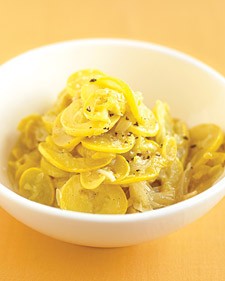
Slow-Cooked Yellow Squash

I’ve had this recipe for a few years, since a summer 2007 Everyday Food issue, and I just tried it, and I loved it. It’s not showy, but cooking

Martha's pic

the squash this way really brought out the nuttiness of the crookneck, just like Martha said it would.  I also loved that it cooked while I prepared everything else for dinner. So, if you happened to pick four yellow squash out of your garden yesterday like I did (it’s the only item producing this year, but that’s one better than last!), you may want to give this recipe a go. I’m definitely using it again and again.

Slow-Cooked Yellow Squash

  • 2 tablespoons olive oil
  • 1 medium onion, halved and thinly sliced
  • 4 yellow squashes (8 ounces each), thinly sliced
  • Coarse salt and ground pepper
  1. In a large pot, heat oil over medium-low. Add onion, squashes, and 2 tablespoons water. Season with salt and pepper, and toss well. Cover, and cook, stirring occasionally, until soft, 30 to 35 minutes.

Thai Sticky Rice with Peanut Dipping Sauce

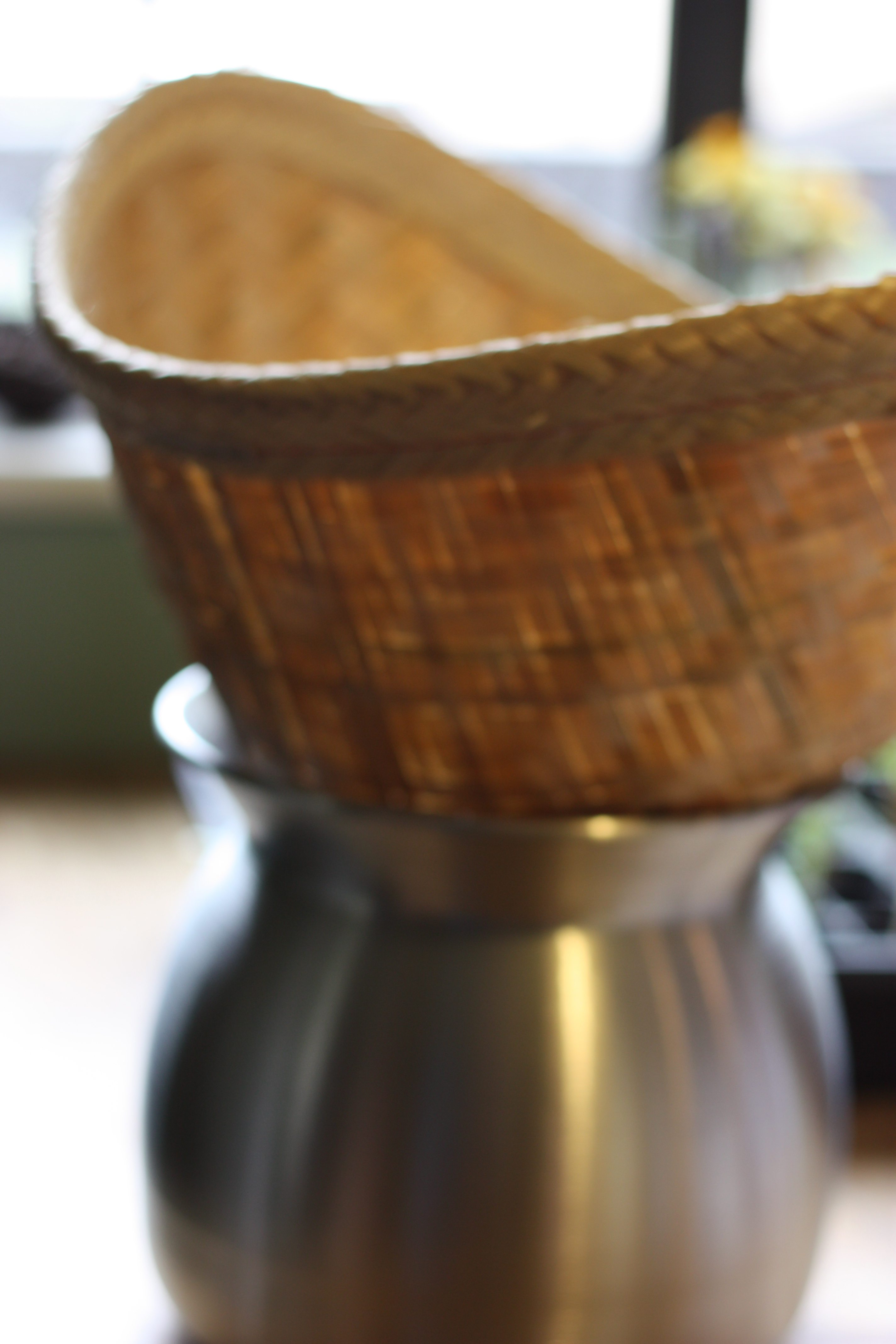
I noticed a strange looking pot at my friend’s house the other day, and when I asked her about it, she told me it was this marvelous thing she picked up at the Asian
This is the steam pot and bamboo basket from the Asian Market

Market on 300 S. and 291 E. in Provo, and it’s purpose was to make sticky rice. Well, I love sticky rice, so the pot was purchased within a week, and while I was in this terrific market, I asked the owner if she could tell me how to make peanut sauce. I am so glad I did! She pointed out all the ingredients, and then was about to write a recipe for me, when I noticed she had a small, self-published recipe book for $6. I bought it, and then I made this rice 3 times the first week, not only because the sticky rice is so fun to eat, but also because her peanut sauce in unbelievable. I would highly suggest finding a market to buy this pot and sticky rice in, and give it a go. It will bring happiness. I’m printing this recipe from Kanakum Lawson’s recipe book, with her permission.

Thai Sticky Rice (a terrific dish for kids!)

1. In lukewarm water, soak stick rice for 2 1/2-3 hours.

2. Fill half of the steamer pot with water. Drain the rice and put it in the bamboo basket, cover the rice with any lid that will fit (or aluminum foil). set the bamboo basket over the steamer pot (don’t let the water touch the bamboo basket).

3. Bring to boil and let it steam for 10 minutes.

4. Stir, so the rice at the bottom moves to the top.

5. Steam for 10 more minutes and stir again.

6. Steam for 10 more minutes. The color of the rice will turn clear when it’s done. Taste to see if it’s soft enough. If it’s still not soft enough, steam just 5 minutes more and check again, until it’s done.

Tips: You can re-steam the rice it it’s too hard later on (because of dry weather). To clean the basket, just leave the rice to dry and then wipe out with your hand.

AMAZING Peanut Sauce
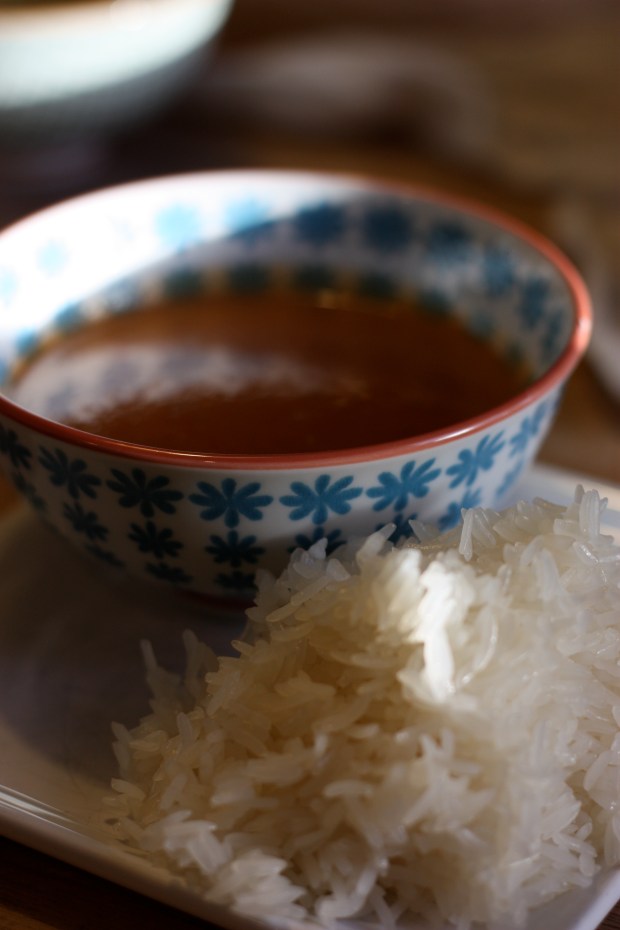
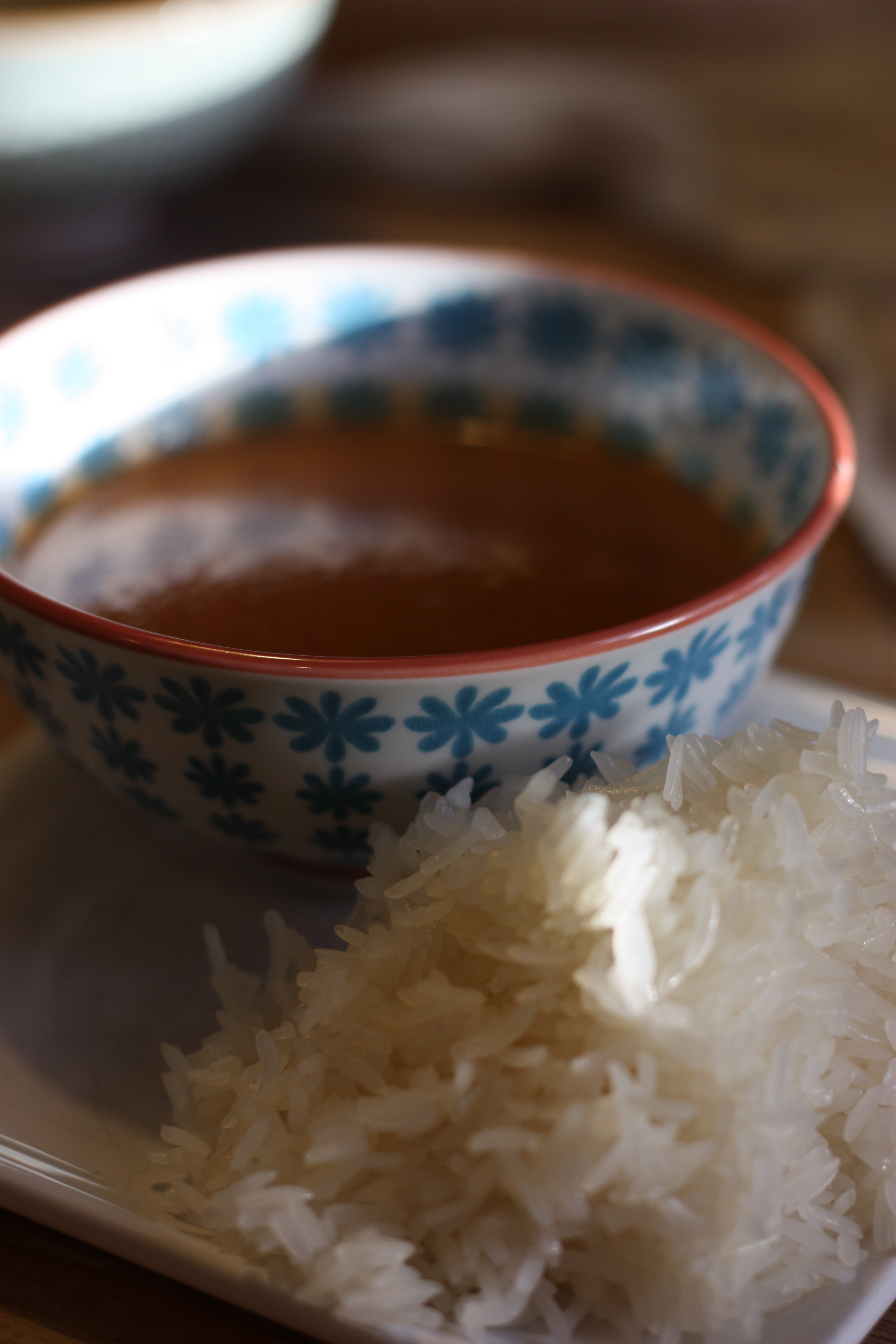
Sticky Rice and Peanut Sauce

2 T. tamarind liquid
4-5 T. peanut butter (Lawson suggests natural chunky, but I’ve used unnatural creamy, and it works great, too)
2 T. red curry paste
6 T. sugar
4 T. fish sauce
1 1/2 c. coconut milk

1. In a saucepan, add coconut milk and heat it up at medium heat.

2. As it’s heating, stir in the curry paste and break the paste into small pices. Mix well.

3. When you see red oil simmering to the top, add the peanut butter, sugar, fish sauce and tamarind liquid. Stir.

4. Taste. You should be ale to taste all three flavors, salty, sweet, and sour. If it becomes too thick, add a few teaspoons of water to thin the paste (if too spicy, reduce curry; too salty, reduce fish oil or add sugar. I think it’s divine how she’s balanced the flavors!)
Lemon Basil Orzo Salad

This has become my go-to spring/summer pasta salad that I could (and sometimes do) inhale straight from the bowl in its entirety. So very refreshing and simple.

Salad:
1 pound orzo pasta, cooked and rinsed with cold water
2 14-oz cans cannellini beans, rinsed
2 large tomatoes, diced (or more, per your preference)
2/3 – 1 cup feta cheese
8 scallions, chopped

Combine all but the feta, set aside.

Lemon Vinaigrette: (Not sure what happened to the spacing here – or how to change it?)
2/3 cup fresh lemon juice

1/2 cup olive oil

4-6 cloves garlic, minced

24+ good-size fresh basil leaves, minced

1 – 2 tsp salt
1 tsp pepper

Mix vinaigrette and toss over salad. Chill for at least a couple of hours. Add crumbled feta prior to serving. Enjoy!

Sweet Potato Pancakes (Latkes)

Wow. I must be on a sweet potato kick–hadn’t realized it. These are delicious. I love them. We usually eat them as a main course, although I know they’re more common as a side. This recipe comes from a 2006 Everyday Food.

Sweet Potato Pancakes

1 lb. sweet potatoes, peeled
3 scallions, finely chopped
2 large eggs, lightly beaten
1/2 c. all-purpose flour
coarse salt and ground pepper
3/4 c. vegetable oil
sour cream, for serving

1. Coarsely grate sweet potatoes on the large holes of a box grater ) or use a food processor fitted with a shredding blade). Transfer to a large bowl: stir in scallions, eggs, flour, 1 t. coarse salt and 1/2 t. pepper.

2. Using a packed 1/4 c. measure of potato mixture per pancake shape into mounds. With hands, form each into a firm ball; transfer to a baking sheet. With palm, flatten balls into 3/4″ cakes.

3. In a large skillet, heat oil over medium until hot.* Using a metal spatula with a thin blade, carefully transfer 6 cakes to skillet; flatten to about 1/2″ thick. Cook until golden brown, 4-5 minutes per side. Transfer pancakes to a paper-towel-lined plate; sprinkle with coarse salt. Repeat with remaining cakes. Serve immediately, with sour cream, if desired.

*Make sure not to get the pan too hot (like on high heat), or the sides will brown too quickly, but the middles won’t be cooked entirely.

Light! Mashed Sweet Potatoes

So, perhaps like many Americans come January, I’m fishing through cookbooks and trying to lighten up this month. Sometimes it’s hard going when you like your food to taste good, but this recipe is excellent–the missing calories aren’t notably missing, and I would definitely make this one come any other month of the year. A great side dish. This recipe comes from the Best Light Recipe. Make sure to allow for enough cooking time–it’s on the long side, but welcome if you have other things to prepare while this dish is cooking.

Light Mashed Sweet Potatoes

2-3 medium sweet potatoes, peeled and cut lengthwise into fourths, then crosswise into 1/4″ slices
1 t. sugar
1/2 t. salt
3/4 c. water
1 T. butter, melted
6 T. half and half, warmed

In a medium saucepan, bring water to a boil over medium-high heat. Add sweet potatoes, salt and sugar, return to a boil, then reduce the heat to a simmer, and cover. Allow to steam for 35-40 minutes, until a sweet potato falls apart when pricked by a fork. Remove from heat. Using a potato masher [or a fork], mash the sweet potatoes until creamy, then add the melted butter and warmed half and half. Mix well, and season with salt and pepper, if desired.

This recipe serves 4. One serving has 220 calories, 6 grams fat, and 6 grams of fiber, if you’re interested.

Shredded & Roasted Brussels Sprouts with Almonds & Parmesan

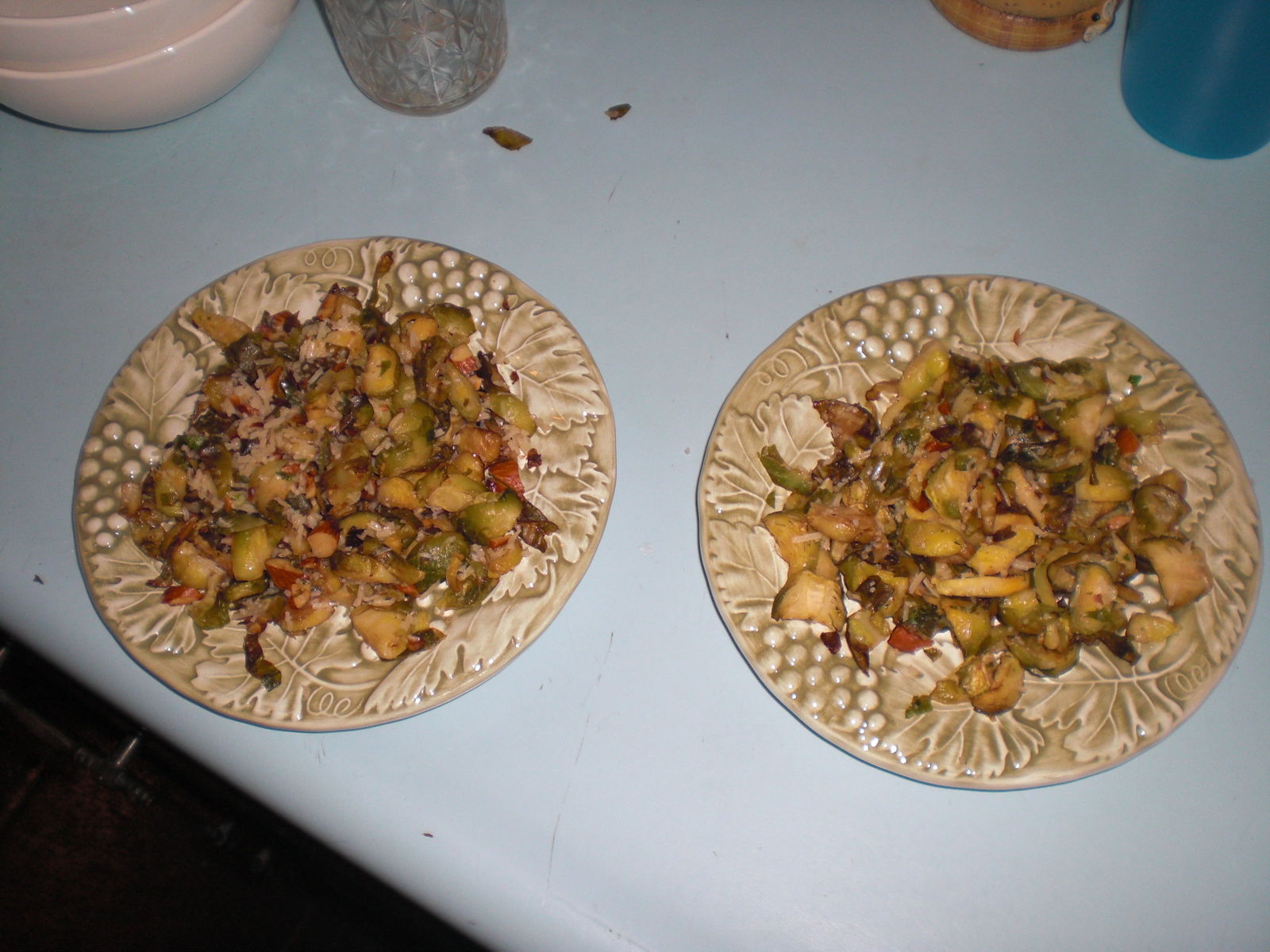
I’ve been looking for the perfect recipe for Brussels Sprouts and I think I found it.  The recipe is from Kalyn’s Kitchen, where I get a lot of my favorite vegetable recipes.

I’m sure ideally the recipe supposes you’ll use fresh brussels sprouts, but I made this tonight with frozen.  I microwaved about 20 sprouts on high for 4 minutes and then chopped them up.

Shredded and Roasted Brussels Sprouts with Almonds and Parmesan
(Makes 2-3 servings)

1 lb. brussels sprouts
1 1/2 T olive oil
1 tsp. balsamic vinegar
salt and fresh ground black pepper to taste
1-2 T coarsely grated Parmesan cheese
1-2 T toasted slivered almonds

Preheat oven to 400F.  Cut the sprouts crosswise into thin strips about 3/8 inch wide.  Put shredded sprouts into a bowl. Whisk together the olive oil and balsamic vinegar, then toss the brussels sprouts with the oil-vinegar mixture and season with a generous amount of fresh ground black pepper and some salt.

Arrange the brussels sprouts on a roasting pan in a single layer. Roast until the brussels sprouts are nicely browned on the edges and tender, about 25 minutes, stirring occasionally.

During the last few minutes of roasting time, put almonds in a dry pan and toast 1-2 minutes, shaking the pan so they don’t burn. Don’t walk away because they go from nicely browned to burned in a few seconds.

Wipe out the bowl you used to toss the raw brussels sprouts in, and when they are cooked through and browned as much as you’d like, toss the hot sprouts with the toasted almonds and coarsely grated Parmesan.

Pomegranate Fontina Rice Balls

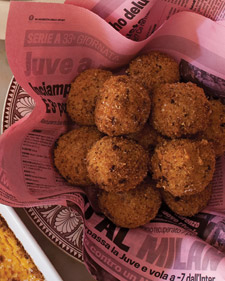
This is a Martha Stewart Living Recipe from this last December. When some friends and I were together last year, eating these yummy

Martha's Picture, not mine

rice balls in Boston, I starting searching for a good recipe to make them. Although this one might be a little more extravagant than others, it’s also very, very good. I didn’t use grapeseed or safflower oil (just canola), and because pomegranates are out of season now, I put in small dollops of black current jam. I think lingonberry jam would also be terrific, as would probably raspberry or any other favorite. I did use fontina cheese, and it was great–melted perfectly and was delicious. But, if you’re wanting something a little more budget-friendly, cubes of mozzerella would also be good, I think (just not fresh mozz). Cubes of ham would also be good, if you wanted.

Also, the recipe doesn’t specify how much salt to add, but it needs quite a bit. Definitely taste the rice mixture before refrigerating it, and add according (1 t. + more according to taste). And note the yield: it makes a lot. I refrigerated the rice mixture for a couple of days and it held up well in an airtight container.

Pomegranate Fontina Rice Balls
Makes about 50

  • 2 tablespoons grapeseed oil
  • 1 small onion, chopped (1 cup)
  • 1 pound arborio rice (2 1/3 cups)
  • 1 cup dry white wine
  • 6 cups water, plus more if needed
  • 3 small sprigs rosemary
  • 1 cup finely grated Parmesan cheese (4 ounces)
  • 1 ounce (2 tablespoons) unsalted butter
  • Coarse salt and freshly ground pepper
  • 1 cup diced fontina cheese (4 ounces)
  • 1 cup pomegranate seeds
  • 4 cups fine plain breadcrumbs
  • 4 large eggs, beaten with 1 tablespoon water
  • Safflower oil, for frying (about 8 cups)

Directions

  1. Heat grapeseed oil in a medium saucepan over medium heat. Add onion, and cook until soft and translucent, about 7 minutes. Add rice, and toast, stirring often, for 2 minutes.
  2. Remove from heat. Add wine. Heat over medium-high heat, and cook, stirring constantly, until wine has reduced by half, about 3 minutes. Add 2 cups water and the rosemary. Cook, stirring constantly and adding 2 cups water at a time, plus more if needed, waiting for each addition to be absorbed before adding the next, until rice is al dente, about 20 minutes more. Discard rosemary sprigs.
  3. Add Parmesan and butter, and season with salt and pepper. (Mixture will loosely hold its shape.) Transfer to a baking sheet, and refrigerate until cooled, about 2 hours or overnight.
  4. Transfer rice to a bowl, and stir in fontina and pomegranate seeds. Form into 1 3/4-inch balls, and transfer to a clean baking sheet. Place breadcrumbs on a plate. Roll each ball in breadcrumbs to coat, then in egg mixture, then again in breadcrumbs, returning to baking sheet as you work.
  5. Heat 4 inches safflower oil in a medium pot until a deep-fry thermometer reaches 350 degrees. Working in batches, carefully drop rice balls into oil, and fry until golden, about 2 1/2 minutes. Transfer to paper towel-lined plates to drain. Sprinkle with salt.

Garlicky Potato Wedges

Oh my. These are quite amazing, a welcome respite after a week of pretty so-so recipes (which pinnacled with ricotta pie last

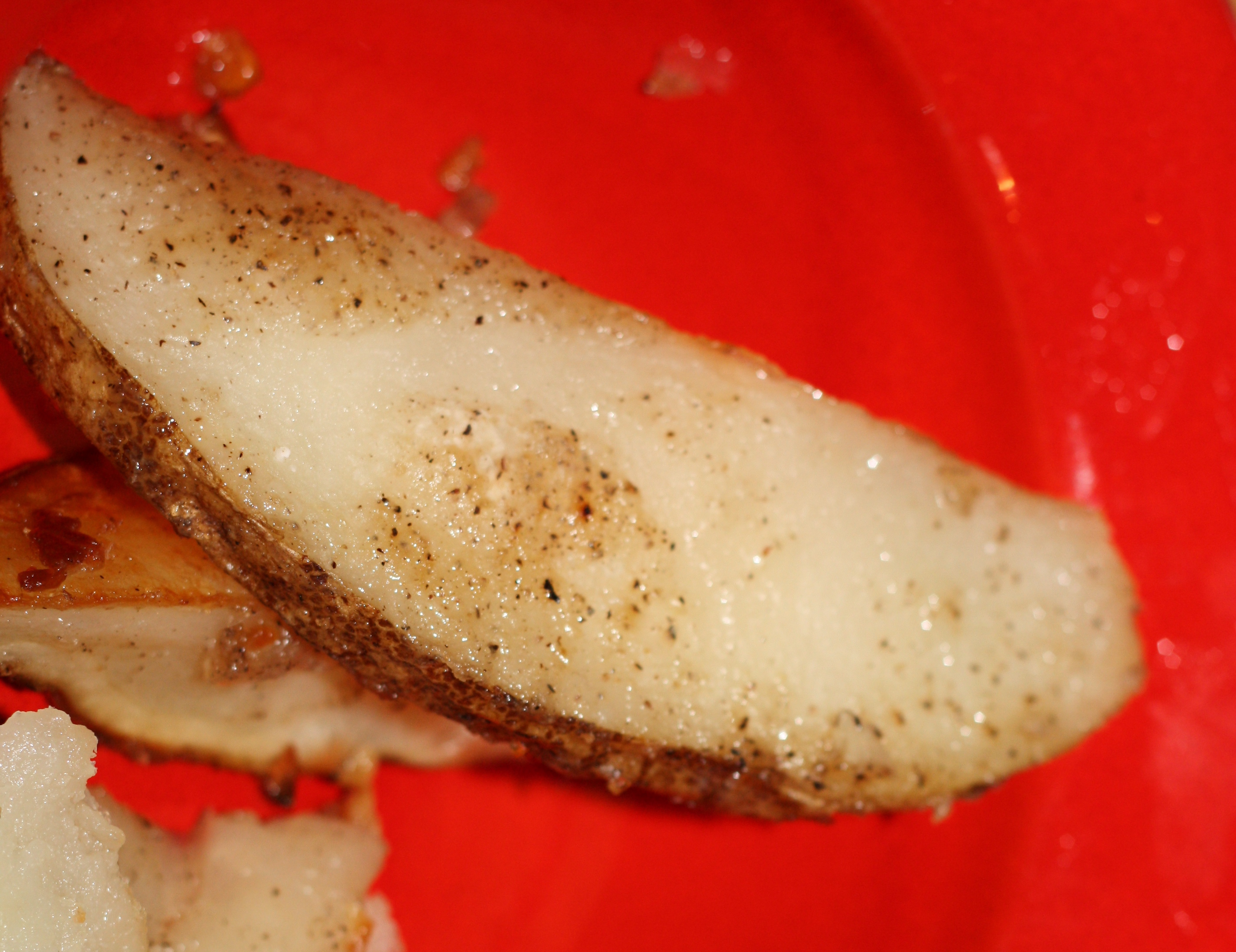
Only two wedges remained after dinner.

night that the kids took one bite of and said “this is disgusting.” Any one have a good recipe for ricotta pie?). Anyway, if you’re into garlic and potatoes (personal favorites), I think you will love these. I declared last night that we should eat these weekly–Henry objected (he doesn’t like potatoes!?) and conceded monthly, then declared, “and today’s the first day of March! No more potatoes in March.” Rex and I both decided we would count yesterday as February instead.

Garlicky Potato Wedges
from America’s Test Kitchen Annual, 2009

3 russet potatoes, cut into twelve wedges lengthwise
6 cloves garlic, minced
6 T. vegetable oil
2 T. cornstarch
1 1/2 t. salt
3/4 t. pepper
1/2 t. garlic powder

Preheat oven to 475. Place oil and garlic in a large microwaveable bowl and microwave on high for 1-2 minutes, until the garlic is fragrant. Leave the garlic in the bowl, but remove 5 T. of the oil to a large rimmed baking sheet and swirl to cover the sheet. Set aside.

Place potato wedges in microwaveable bowl and toss with the remaining garlic. Cover tightly with plastic wrap and microwave on high for 2-3 minutes. Remove, stir potatoes, then microwave again for an additional 2-3 minutes, until the edges of the potatoes are translucent. Meanwhile, stir the cornstarch, salt, pepper, and garlic powder together in a small bowl.

Transfer the potatoes to the oiled baking sheet and sprinkle with the cornstarch mixture. Roast for 35-40 minutes, flipping the wedges  half way through the baking time. Enjoy!

Asparagus with Pine Nuts & Capers

Whenever I make dinner for my whole family (parents & siblings), they are disappointed if I don’t serve this very simple asparagus dish.  I usually steam the asparagus, but the sauce also works on roasted asparagus and on haricots vert.  If this dish is your contribution to a potluck, it is best to have the sauce made separately beforehand and to assemble the recipe on location in order to avoid making the asparagus and pine nuts soggy.  The recipe is adapted from Williams Sonoma Simple Classics Cookbook.  Serves 6.

1/4 cup pine nuts

2 pounds of asparagus

6 tablespoons unsalted butter (unsalted is pretty important because the capers tend to be very salty)

1 tablespoon fresh lemon juice

1/4 cup capers, drained (if you have especially salty capers, it’s best to rinse them in cold water)

1/4 lb. Parmesan cheese (I like Grana Padano.  If you get the pre-grated stuff, 1/4 pound is about a cup)

1. Toast the pine nuts.  Use a skillet on medium heat tossing occasionally for a minute or two until light brown.

2. Break the tough ends off of the asparagus.  Steam until tender.

3. Meanwhile, in a small saucepan, over medium-low heat, melt the butter.  Add the lemon juice and capers.  Season to taste with pepper.  Cook for 30-40 seconds–don’t let the butter brown.  Adjust seasonings (salt, pepper, lemon) as necessary.

4. Assemble.  Put asparagus in serving dish, cover with lemon-butter-caper mix, sprinkle pine nuts, and shave the cheese.  A vegetable peeler works great to get pretty Parmesan curls, but it tastes just as good if you grate the cheese on the large hole side of the grater and almost as good if you use pre-grated Grana Padano.  I’ve never tried Kraft Parmesan in this recipe, but I imagine it would be pretty gross.

Roasted Cauliflower

I’m back in the kitchen now, after a long hiatus, packing in the fruits and veggies in an attempt to purge all the holiday build-up running through the families’ veins.

This is a recipe I tried (and loved) last night. It’s from Great Food Fast, Martha’s publication, and it’s a great keeper, especially if you’re like me and need interesting ways to cook veggies in order to want to eat them. Make sure to try the capers! They make a notable difference in the flavor and are delicious (I have to admit to not having had them in recent memory–they’re really good).

Roasted Cauliflower

  • 1 head (about 2 pounds) cauliflower, cut into small florets
  • 1 tablespoon olive oil
  • Coarse salt and ground pepper
  • 1 tablespoon butter
  • 2 cloves garlic, thinly sliced
  • 1 teaspoon capers
  • 1 teaspoon caper juice

Directions

  1. Preheat oven to 450 degrees. Trim, and cut cauliflower into small florets; spread in a roasting pan or rimmed baking sheet. Drizzle with olive oil; season with coarse salt and ground pepper. Toss to combine. Roast, tossing once or twice, until cauliflower is golden brown and tender, 20 to 25 minutes.
  2. In a small skillet, melt butter over medium heat. Cook garlic cloves, stirring often, until lightly browned, 2 to 3 minutes. Remove from heat. Add capers and caper juice. Pour over cauliflower, and toss to coat.