Great Potato Salad

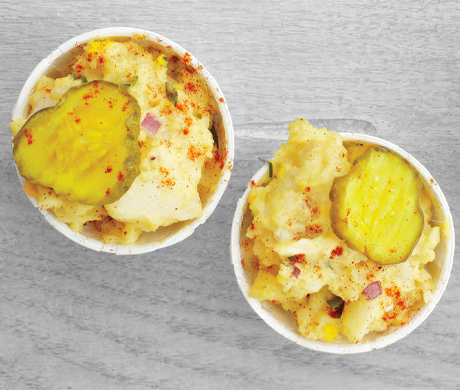
This recipe, from May 2012’s Gourmetmagazine, is one my new favorite potato salad. It’s reminds me of my grandma’s, and since I don’t have her recipe, I’m really happy to have this. Definitely worth trying if you don’t have a tried-and-true recipe you love.

Gourmet’s Image

Great Potato Salad

  • 2 3/4 lbs. medium red-skinned potatoes, peeled (about 8)
  • 1 1/4 t. kosher salt plus more
  • 1/2 c. mayonnaise
  • 1/4 c. sweet pickle juice from jar
  • 8-10 sweet-pickle chips
  • 1 1/2 T. Dijon mustard
  • 1 t. sugar
  • 1/4 t. freshly ground black pepper plus more
  • 5 large hard-boiled egg yolks
  • 2 T. chopped red onion
  • 2 T. chopped flat-leaf parsley
  • Paprika

Place potatoes in a large pot. Add water to cover by 2″, season with salt, and bring to a boil. Reduce heat to medium and cook until potatoes are tender when pierced with a knife, 20-30 minutes. Drain. Place potatoes in a large bowl and let cool slightly.

Meanwhile, whisk mayonnaise, pickle juice, Dijon mustard, sugar, 1/4 teaspoon pepper, and 1 1/4 teaspoons salt in a small bowl for dressing.

Using a large wooden spoon, coarsely smash potatoes, leaving some larger pieces mixed with some well-mashed pieces.

Add dressing and egg yolks to potatoes and toss to coat, coarsely smashing egg yolks. Add onion and parsley; gently mix to incorporate. Season to taste with more salt and pepper, if desired. DO AHEAD: Can be made 1 day ahead. Cover and chill.

Divide potato salad among small paper cups or bowls; dust with paprika. Top each serving with a pickle chip.

Blueberry Bran Muffins

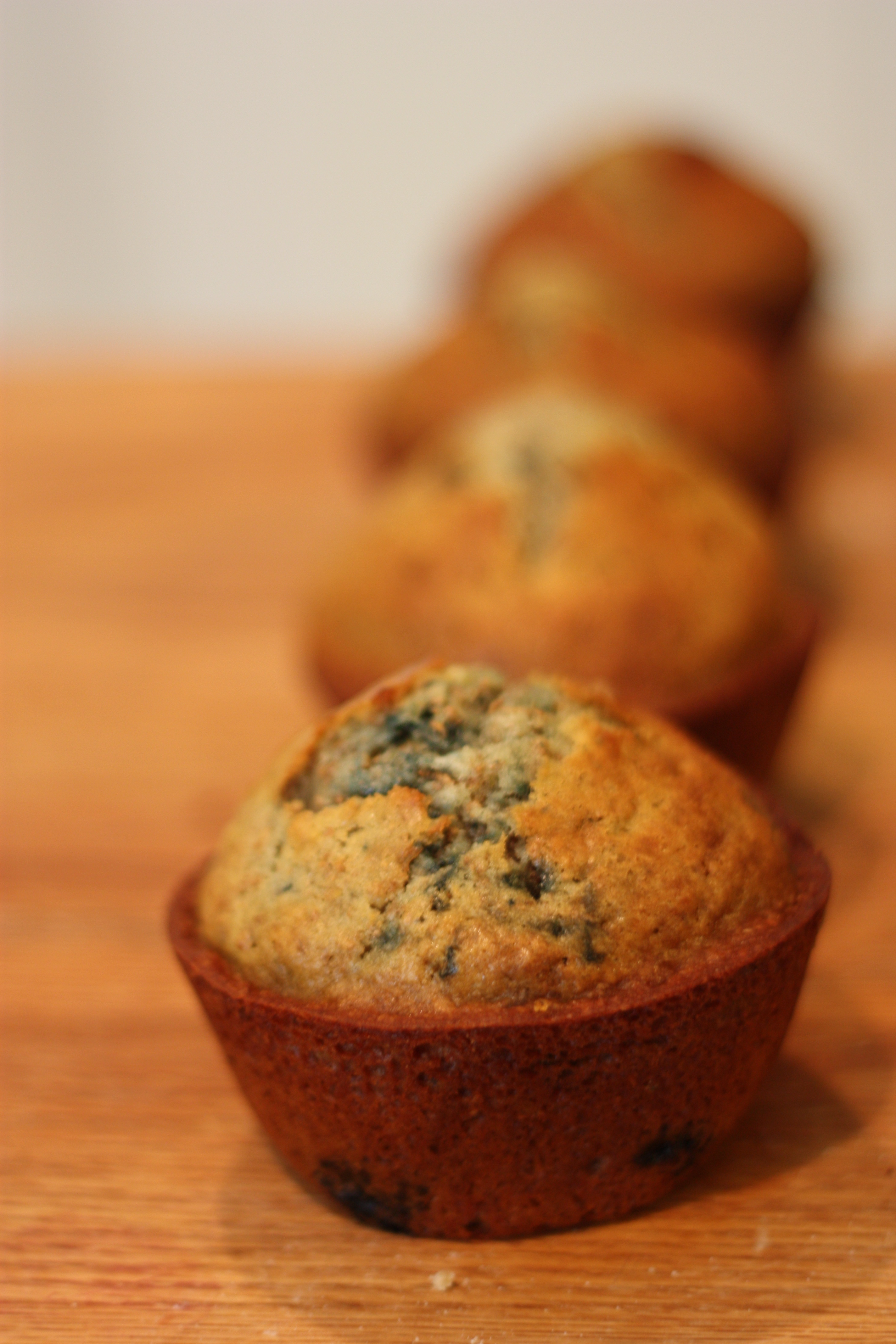
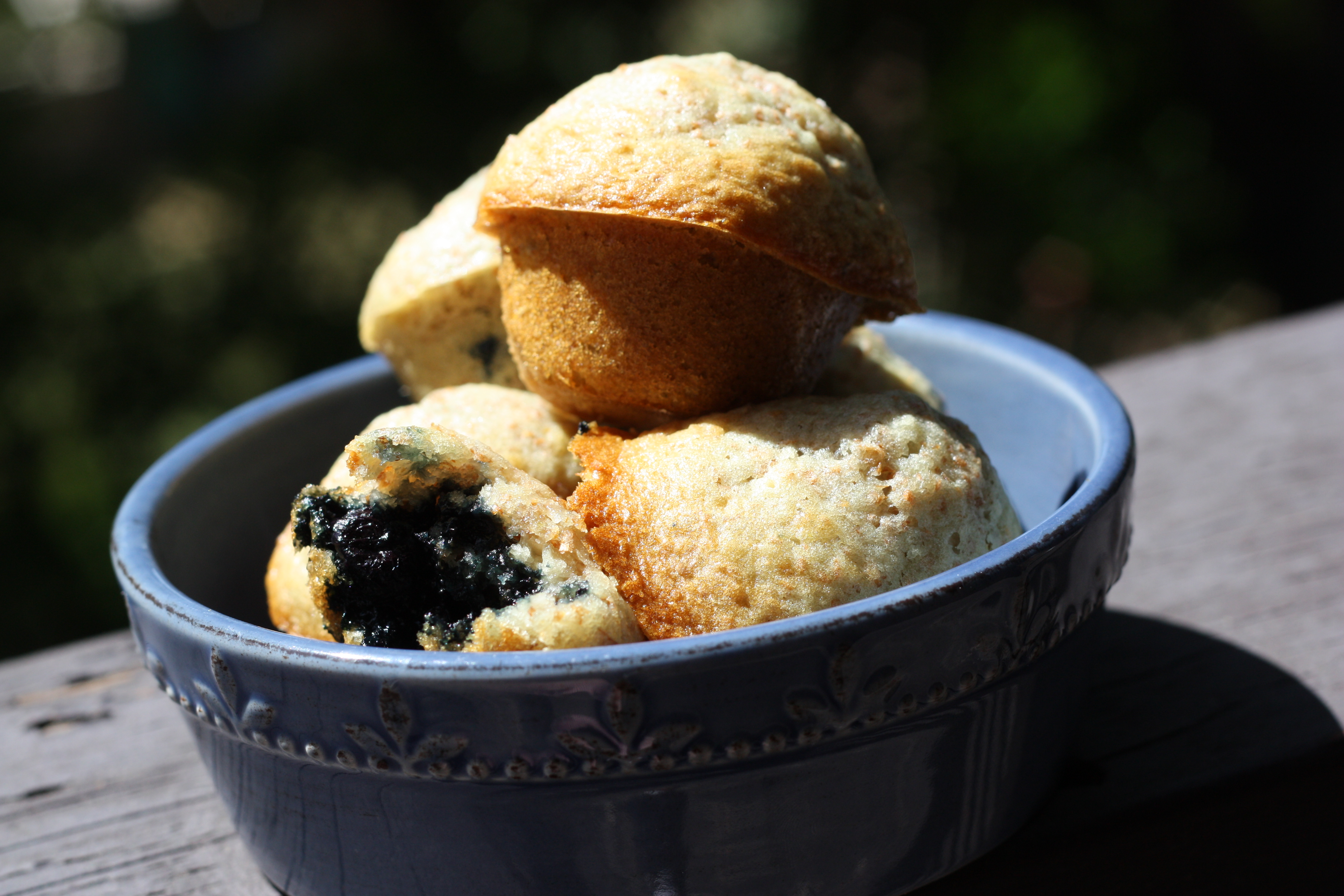
This recipe, from Lucinda Scala Quinn’s Mad Hungrycookbook, is terrific. She makes a note that she used to bake these for a shop she worked in; the

I loved the appearance and great domed top on these

recipe was old with a hand-scribbled “the best blueberry muffins” on the side. With that kind-of endorsement, I had to try them! And they are wonderful. I think they might be the best I have made overall–they have a little bit of a strong baking soda taste, but for the texture, I think this might be necessary since the batter is quite runny. I’ve tried substituting half the all-purpose flour with whole wheat, and the muffins were still delicious, but tasted much more like a bran muffin than a blueberry one. Anyway, definitely a keeper muffin!

Blueberry Bran Muffins

  • 2 c. all-purpose flour
  • 1 T. baking soda
  • 1/2 t. coarse salt
  • 2 large eggs
  • 4 T. pure maple syrup
  • 1/2 c. sugar
  • 1/2 c. safflower (or other vegetable oil)
  • 1 1/2 c. milk
  • 1 c. fresh or frozen blueberries (toss briefly in flour before incorporating to even out distribution)
  • 1/2 c. wheat bran or wheat germ
  1. Preheat the oven to 400 degrees. Grease a standard 12-cup muffin tin or line with paper liners.
  2. In a large bowl, whisk together the flour, baking soda, and salt. Separately beat together the eggs, maple syrup, sugar, oil, and milk. Stir the egg mixture into the flour mixture. Stir in the berries and bran. Fill the muffin cups three-quarters full.
  3. Bake for 25 minutes, or until golden brown. Cool for 5 minutes in the pan before removing.

Whole Wheat Chocolate Chip Cookies

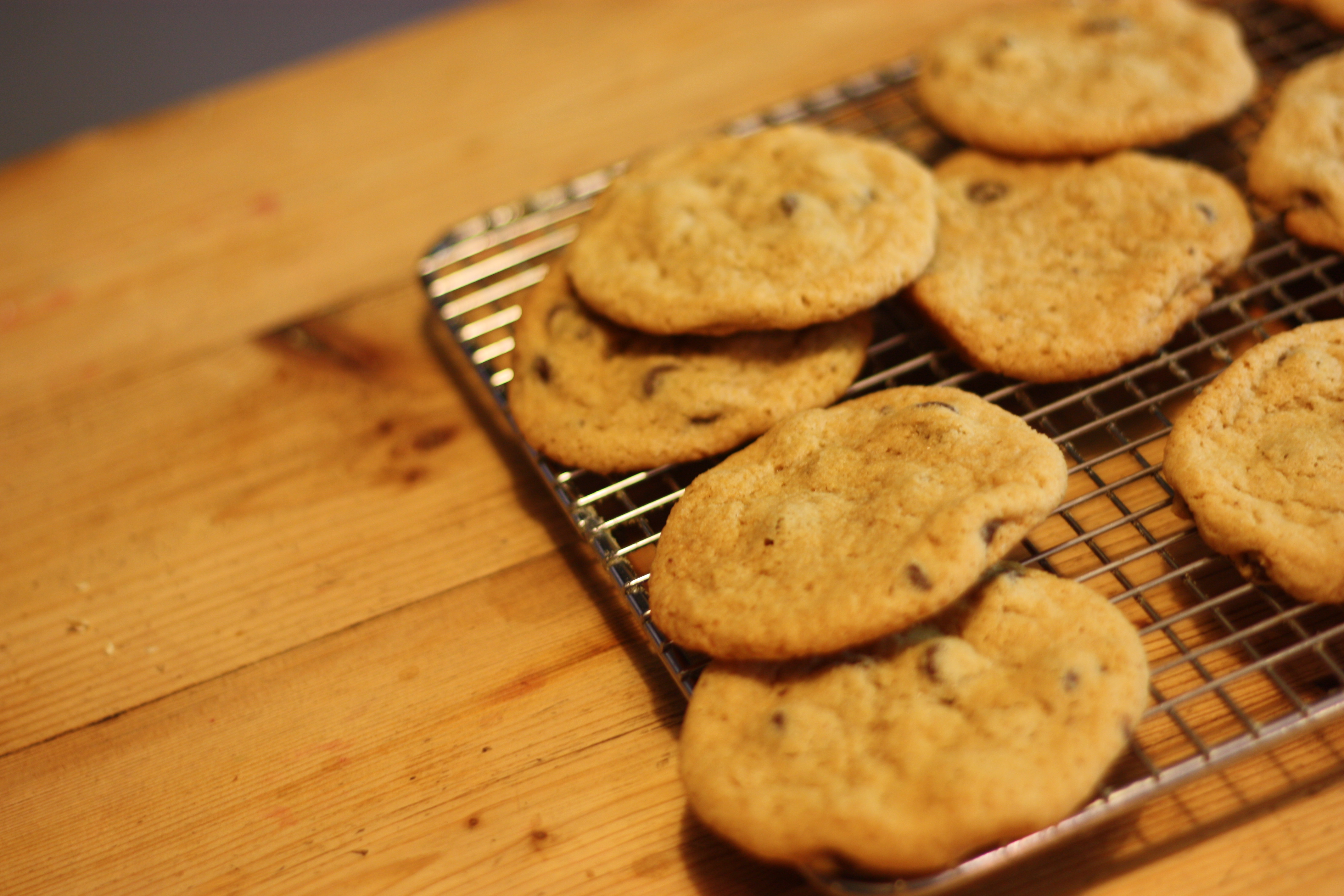
I saw a glowing review of a 2011 cookbook entitled Good to the Grain, so when I saw that the library had it, I snagged it. The first recipe I tried was the 100% whole wheat chocolate chip cookies, deciding that if the author could pull off this recipe, I would know the cookbook was really well tested and tried. Well, she did it. These are great! In fact, I used winter white wheat, and the cookies didn’t even look much different than if I had used all-purpose flour, and honestly, not one of my kids made a comment or thought they “tasted different.” I thought they were delicious (notice, though, that they are not low-sugar or fat), and I am planning a solid future with them 🙂 Incidentally, I have since tried many recipes from Good to the Grain, and if you’re interested in adding more whole grain flours to your baking, this is a really terrific book. Can’t wait till I own a copy!

Whole Wheat Chocolate Chip Cookies

3 c. whole wheat flour
1 1/2 t. baking powder
1 t. baking soda
1 1/2 t. kosher salt
1 c. (2 sticks) cold butter, cut into small pieces
1 c. dark brown sugar
1 c. sugar
2 eggs
2 t. vanilla extract
8 ounces bittersweet chocolate, chopped into bits

Preheat oven to 350 degrees. Line two baking sheets with parchment.

Whisk the whole wheat flour, baking powder, baking soda and salt together in a medium bowl. Set aside.

In the bowl of a stand mixer (or a large bowl in which you can use a hand mixer), beat the butter and sugars for 2-3 minutes. Once they are creamy, add the eggs and vanilla. Beat to combine, about 30 seconds.

With the mixer on low, add the dry ingredients and mix until just combined. Then, stir in the chopped chocolate.

Scoop 1-2 T. of dough per cookie. Bake for 16-20 minutes, rotating the pans front to back, and top to bottom at 8 minutes. Let cool for 10 minutes on the sheet (on a wire rack), then remove to the rack to cool completely cool. Yields about 24.

Henry (my pickiest eater) loving these!

Oatmeal Sandwich Bread

I’ve been making this loaf for our daily bread lately, and the kids and I are all big fans (I actually prefer a multigrain loaf, but since I’m not the only one
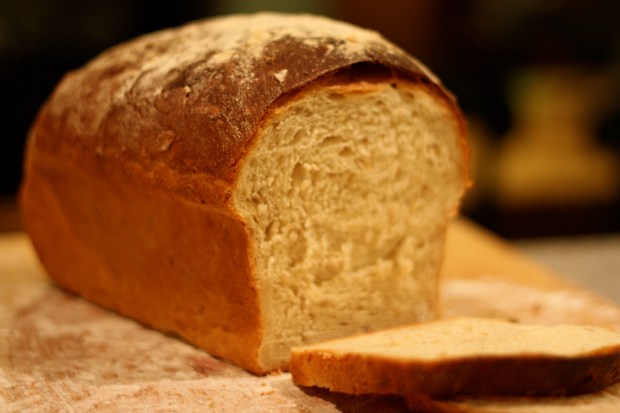
I dust the top with flour before baking (instead of brushing with butter) because I like how it looks.

in the house . . .). This recipe is from The Best Recipe (i.e. the best cookbook, ever), and it’s the oatmeal variation on the American Sandwich loaf. I make it almost weekly, and its biggest danger is that it can really grow if you get distracted (or start talking to a friend), and then it turns into a puffed monster. But really, that’s not so bad. All in all, a family favorite. I’ve tripled the original amounts because our family of six goes through about 3 loaves a week, which is what I make. I loved that Lucy came home last week and said, “Mom, I love Mondays because I come home to the most delicious smell.” Her comment was definitely more satisfying than my bread.

Oatmeal Sandwich Bread
Makes 3 loaves

2 1/4 c. rolled oats [I’ve also used steel cut oats; the final texture was chewier, and it threw the water ratio, but worked]
2 1/4 c. water, warm
3 c. milk, warm
6 T. unsalted butter, melted
1/2 c. + 1 T. honey
7 1/2 c. flour, plus more for workspace
2 T. instant or rapid-rise yeast
2 T. salt

Bring the water to a boil in a saucepan. Add the oats to soften slightly, about 90 seconds (longer for steel cut–I cooked them for about 15). Remove from heat, and set aside to cool while assembling the other ingredients.

In a small bowl, combine the milk, honey, yeast, and butter. Then, in the bowl of a stand mixer, mix 4 cups flour, cooled oatmeal mixture, and salt together using the dough hook. [Test the temperature: if it’s too hot, you may want to wait until you add the yeast, so you don’t kill it. If you’re unsure, test it. It shouldn’t be above 115 degrees F). Turn the mixer to low and slowly pour in the milk mixture. Mix until dough comes together, about 1 minute, scraping down the bowl as needed, then add the rest of the flour, 1/2 c. at a time, until the the dough clears the sides of the bowl, but still sticks to the bottom.

Increase the speed to medium-low and knead until the dough is smooth and elastic, about 7 minutes. If after 4 minutes, more flour is needed, add remaining 1 T. at a time, and then wait for 30 seconds before adding more, checking that the dough starts clearing the sides of the bowl.

Once dough is smooth and elastic, remove and knead by hand for about 30 seconds to form a smooth round ball. Place dough in a lightly oiled bowl and wrap with plastic wrap. Let rise in a warm place until doubled in size, 1 to 1 1/2 hours.

Once dough has doubled in size, turn out onto a lightly floured workspace and press into a 7-inch square. Starting with the edge closest to you, roll it into a tight cylinder, tucking the ends in but maintaining the cylinder shape. Pinch the seam closed (I also tuck the two sides into the middle, to create a nice dome on the top, then turn it over) and place seam side down in a 9-inch loaf pan. Cover loosely with plastic wrap and allow to rise in a warm place until doubled in size, about 45-60 minutes.

Half an hour before baking, place an oven rack in the middle position and heat oven to 350 degrees. Brush top of dough with 1 tsp. melted butter. Fill another loaf pan halfway with water and place on rack in oven. Place dough filled loaf pan next to water filled pan and bake for 40-50 minutes, until bread is golden and an instant-read thermometer measures at 200 degrees. [I usually skip the water; it makes a fantastic crisp crust, but since I freeze two of the three loaves and stick them all in bread bags, I kill the purpose of the water. If you want an awesome loaf out of the oven, though, you’ll want to do it.]

Let bread cool in pan for 30 minutes before removing to a wire rack to cool completely. If freezing the extra loaves, make sure they cool at room temperature for 4 hours before wrapping them and placing them in the freezer.
Pineapple Upside-down Pancakes

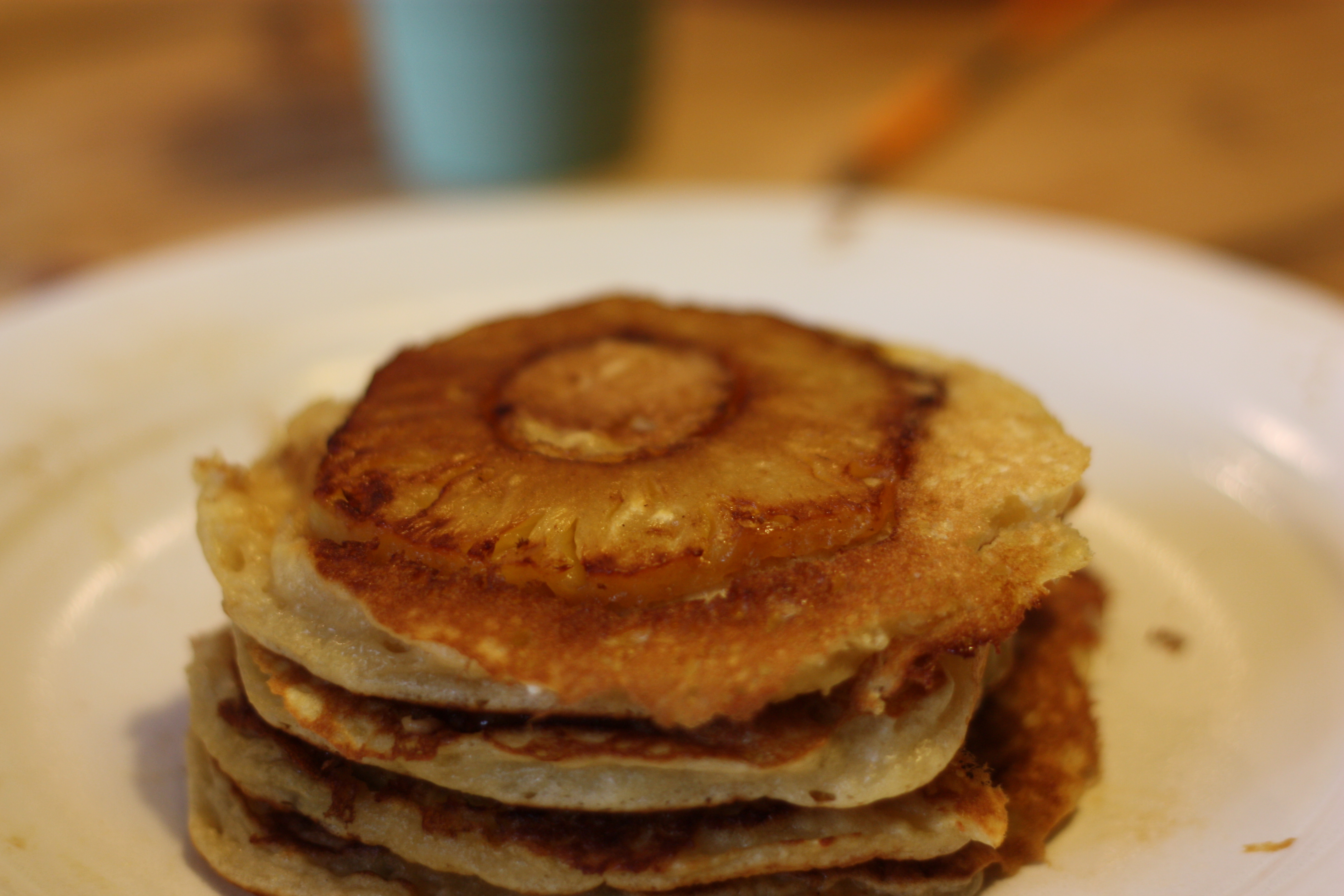
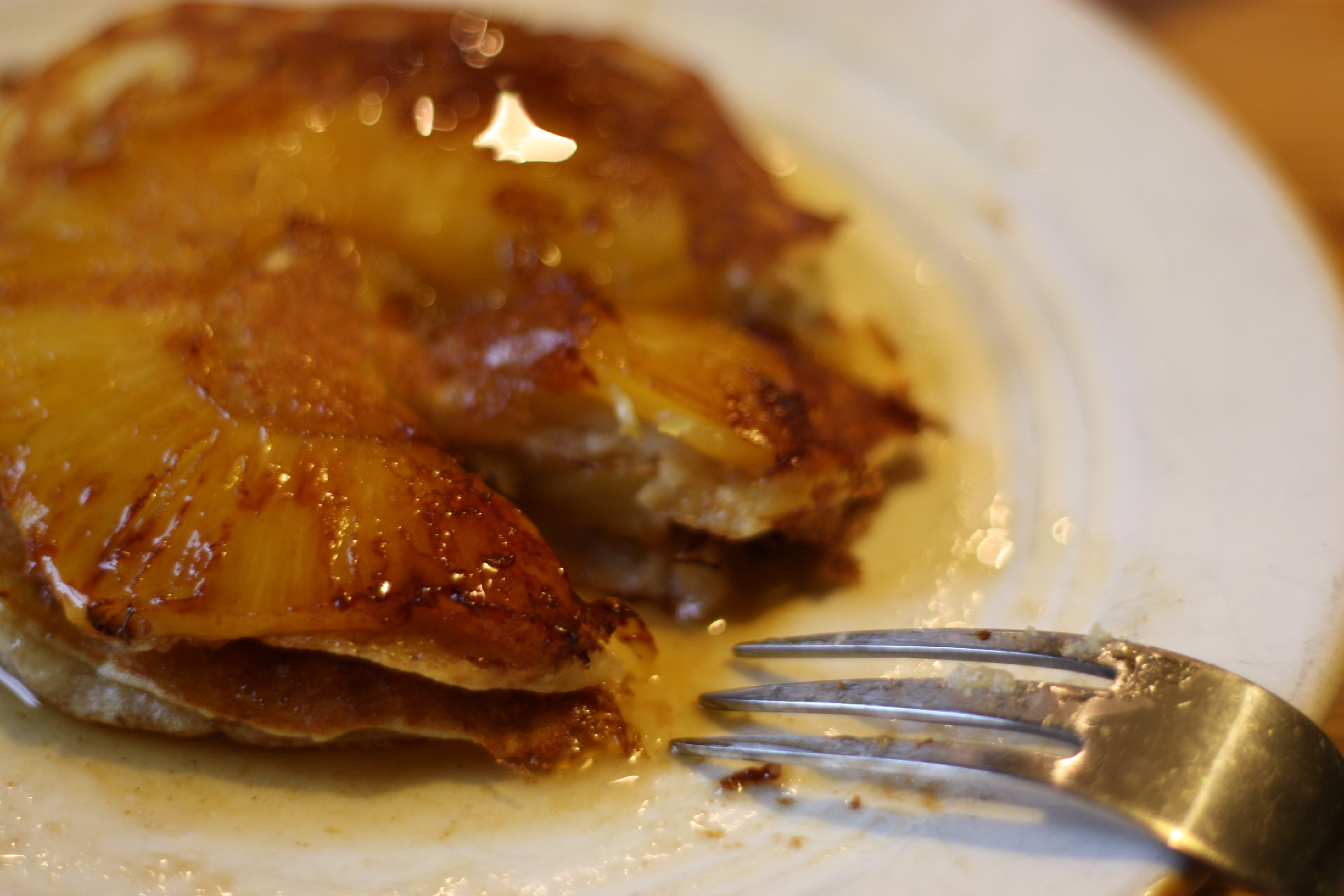
These pancakes are quite excellent. Published in March 2012 Bon Appetit (from a restaurant in New York called Moderne Barn), I knew they were something we would love, but I wasn’t expecting the divine smell that lingered in our home the entire day. It was almost better than the pancakes themselves. So, a must try, but with cooking the pineapple, these pancakes took upwards of 30-45 minutes to complete–not really a fast breakfast, but great for a special one. The last time I made them, my husband was out of town, so I can’t wait to make them again 🙂

Moderne Barn’s Pineapple Upside-down Pancakes

1 T. unsalted butter
1 cinnamon stick, broken in half
1 large pineapple, peeled, cut into eight 1/2″ rounds, cored
3/4 c. dark rum (I don’t have rum on hand, so I used a little rum extract with about 1/2 c. water, but apple juice may be better)
1/4 c. (packed) dark brown sugar

1 c. all-purpose flour
3 T. sugar
1 t. baking soda
3/4 t. kosher salt
1 c. buttermilk
1 large egg
2 T. unsalted butter, melted
1/2 t. vanilla extract
Nonstick vegetable oil spray

Melt butter with cinnamon stick in a large heavy skillet over medium heat. Cook until butter begins to brown, about 2 minutes. Add pineapple slices; cook until light golden brown, 4–5 minutes per side. Remove skillet from heat; add rum and brown sugar. Cook over medium-high heat until juices are thick and syrupy. Transfer pineapple to a plate; let cool. Reserve syrup.

Preheat oven to 325°. Set a wire rack on a rimmed baking sheet. Whisk first 4 ingredients in a large bowl. Add buttermilk and next 3 ingredients; whisk until smooth.

Heat a griddle or large heavy skillet over medium heat. Lightly coat with nonstick spray. Working in batches, pour batter by 1/4-cupfuls onto griddle. Cook each pan- cake until golden brown and bubbles form on top, about 2 minutes. Top each pancake with a pineapple ring. Flip; cook until pancake is golden brown, about 2 minutes. Place pancakes on prepared rack and bake in oven until cooked through, about 5 minutes.
Rewarm reserved pineapple syrup. Divide pancakes among plates; drizzle with pineapple syrup.


Caramel Pecan Brownies

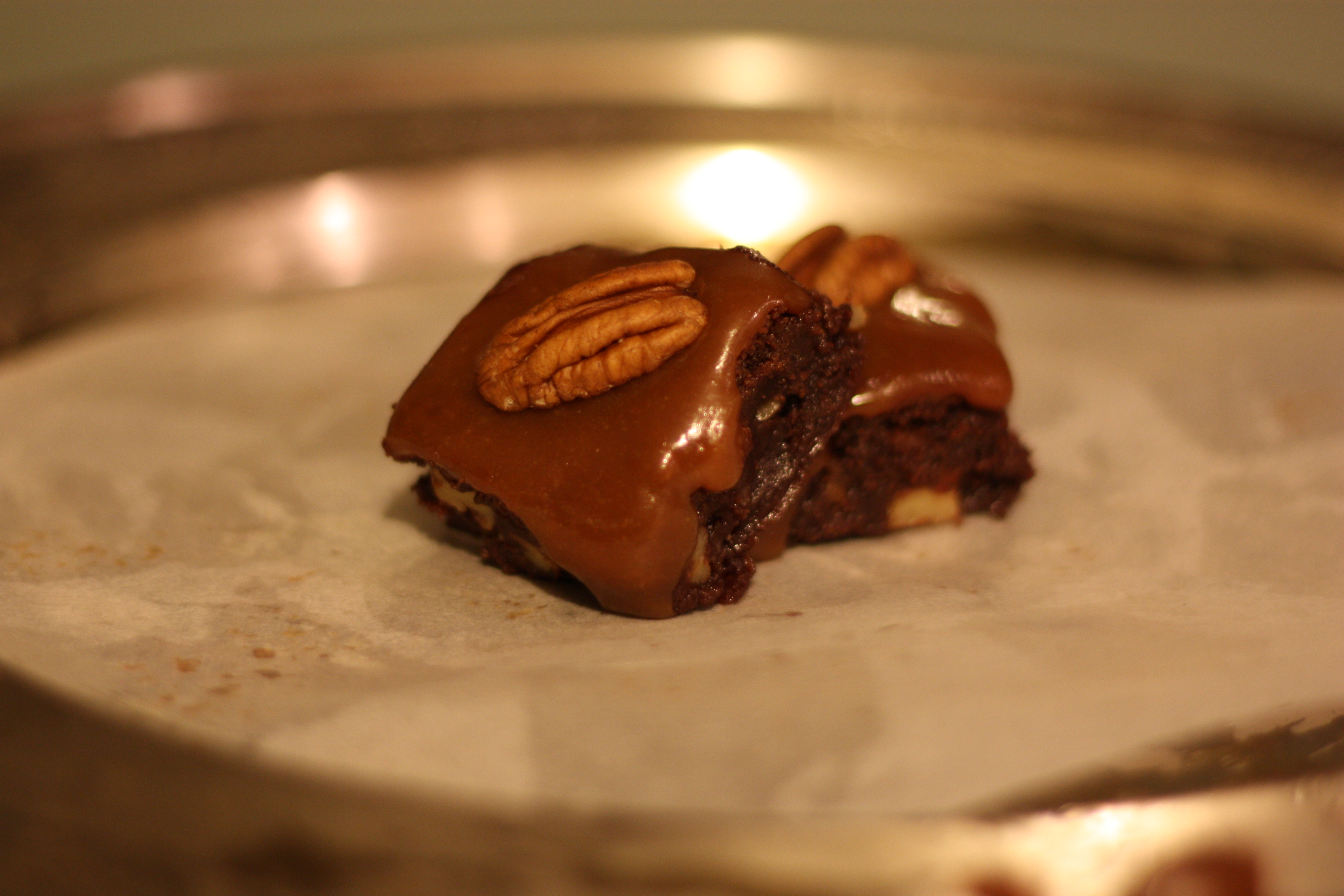
This is the most decadent dessert I know how to make. It is divine. I’ve seen that ATK reprints it every now and again as a “best of the best” recipe, and it is. I got it from the 2007 Best of America’s Test Kitchen Annual, where it’s called “Ultimate Turtle Brownies.” I should note that the caramel is a little tricky. With my electric stove (and because I live at high altitude), I start with the stove at medium until the sugar is melted, I then turn the stove to high, until it gets amber-colored, and then turn it down to medium-high, until it reaches 360 degrees (well, 351 for 4500 feet, where I live). But, once you got it right, it works really well. Enjoy this one!
Caramel Pecan Brownies
For the caramel topping
  • 1/4 cup plus 2 tablespoons heavy cream
  • 1/4 teaspoon salt (I prefer more like 1/2 t.)
  • 1/4 cup water
  • 2 tablespoons light corn syrup
  • 1 1/4 cups sugar
  • 2 tablespoons unsalted butter
  • 1 teaspoon vanilla extract

For the brownies

  • 3/4 cup flour
  • 1/2 teaspoon baking powder
  • 1 stick (4 ounces) unsalted butter, cut into 1-inch pieces
  • 4 ounces bittersweet chocolate, chopped
  • 2 ounces unsweetened chocolate, chopped
  • 2 large eggs, at room temperature
  • 1 cup sugar
  • 1/4 teaspoon salt
  • 2 teaspoons vanilla extract
  • 2/3 cup chopped pecans
  • 1/3 cup semisweet chocolate morsels
  • 25 pecan halves, toasted*, for garnish

To make the caramel: Combine the cream and salt in a small bowl and set aside.

In a medium saucepan with a lid, combine the water and corn syrup. Add the sugar to the center of the saucepan and gently mix to thoroughly moisten the sugar, taking care not to let sugar crystals adhere to the sides of the pan. Cover, bring to a boil over medium-high heat and cook for 3 to 5 minutes, without stirring, until the sugar has completely dissolved and the liquid is clear. Uncover and cook for 3 to 5 minutes, without stirring but gently swirling the pan occasionally, until the liquid is a pale golden color. Reduce the heat to medium-low and cook for 1 to 3 minutes, swirling the pan occasionally, until the caramel is a light amber color and registers about 360 degrees on a candy or instant-read thermometer [On my electric stove, this process is quite different and takes longer. See note above. Also, a candy thermometer is pretty critical here]. Remove the saucepan from the heat and add the cream-salt mixture to the center of the pot, making sure that your hand isn’t directly over the pot (the mixture will bubble and steam vigorously). Stir with a whisk or spatula until the bubbling subsides. Add the butter and vanilla extract, stirring to combine. Transfer to a medium microwavable measuring cup or bowl and set aside.

To make the brownies: Adjust an oven rack to the lower middle position and preheat the oven to 325 degrees. Line a 9-inch-square baking pan with aluminum foil, allowing the extra foil to hang over the edges of the pan. Lightly grease the foil-lined pan with nonstick spray oil.

Combine the flour and baking powder in a small bowl and set aside.

Melt the butter and the bittersweet and unsweetened chocolates in a heatproof bowl set over a saucepan of barely bubbling water, stirring occasionally until smooth; set aside to cool slightly.

In a large bowl, whisk the eggs with the sugar, salt and vanilla extract until well combined. Add the melted chocolate mixture to the egg mixture. Add the flour mixture and stir until almost combined. Add the chopped pecans and chocolate morsels, and combine.

To assemble: Spread half of the brownie batter in the prepared baking pan. Drizzle 1/4 cup of the caramel over the brownie batter. Drop spoonfuls of the remaining brownie batter over the caramel layer; spread evenly into the corners of the pan. Drizzle an additional 1/4 cup caramel over the top. Using the tip of a knife, swirl the caramel and batter. Bake for 35 to 40 minutes, until a toothpick inserted into the center comes out with only a few moist crumbs attached. Cool to room temperature on a wire rack, 1 to 2 hours.

If necessary, heat the remaining caramel (you should have about 3/4 cup) in the microwave on high for 45 to 60 seconds until it is hot and pourable but still thick, stirring once or twice. Pour the caramel over the brownies and use a spatula to spread the caramel evenly. Refrigerate the brownies, uncovered, until they are fully chilled, at least 2 hours or overnight.

Remove from the baking pan by lifting the foil extensions. Cut into 25 evenly sized squares. Press a pecan half onto the surface of each brownie. Serve chilled or at room temperature.

Velvety Chocolate Pudding

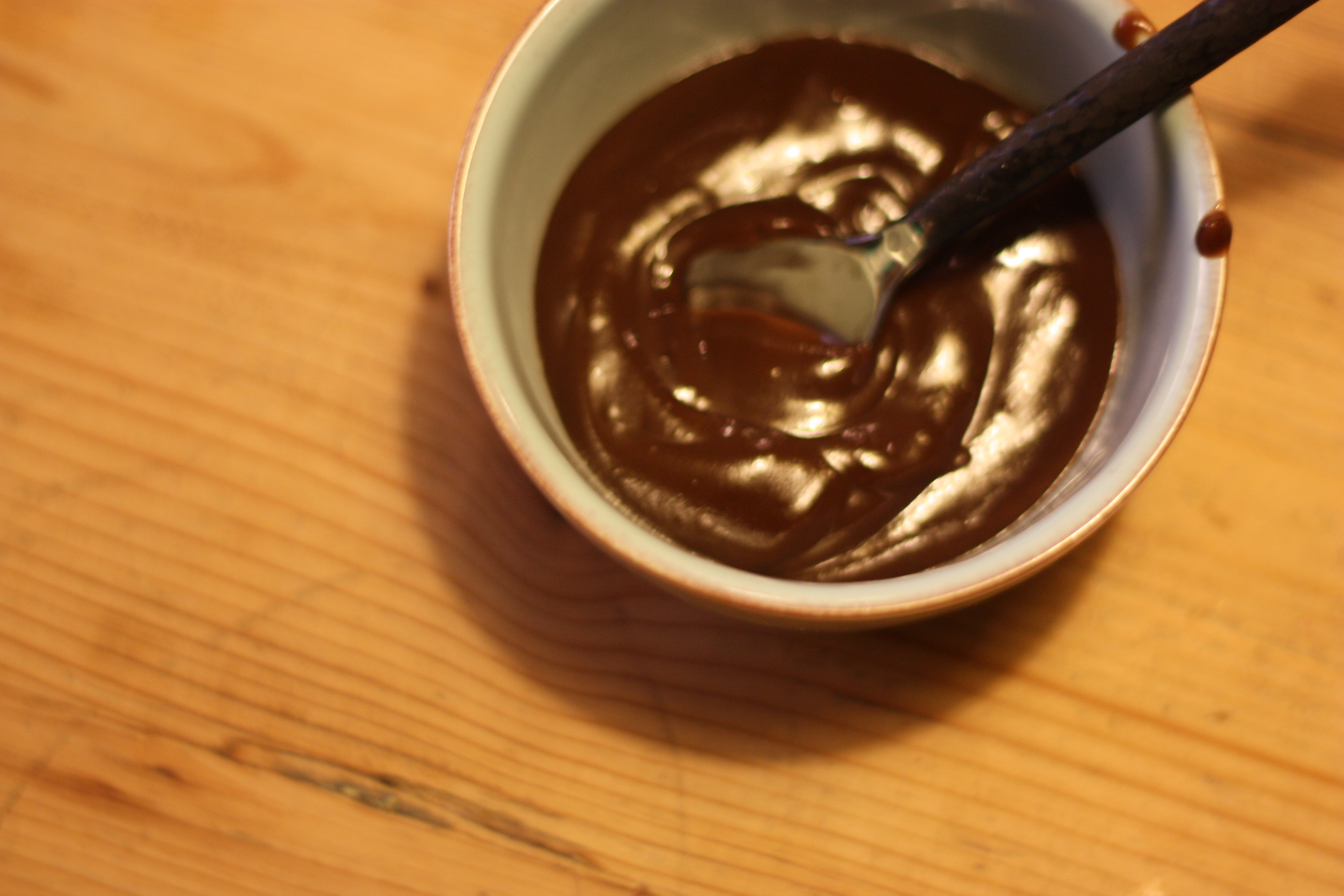
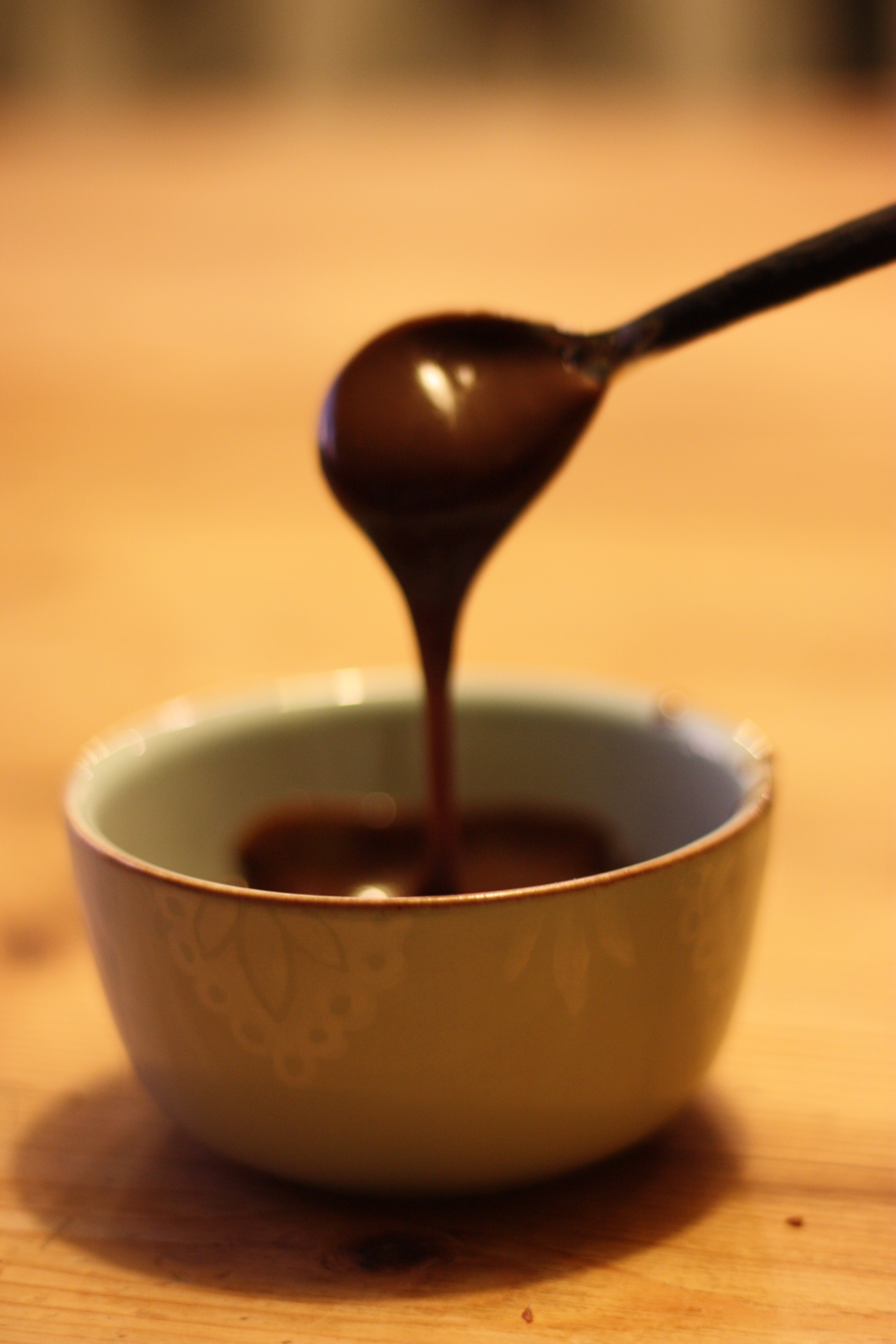
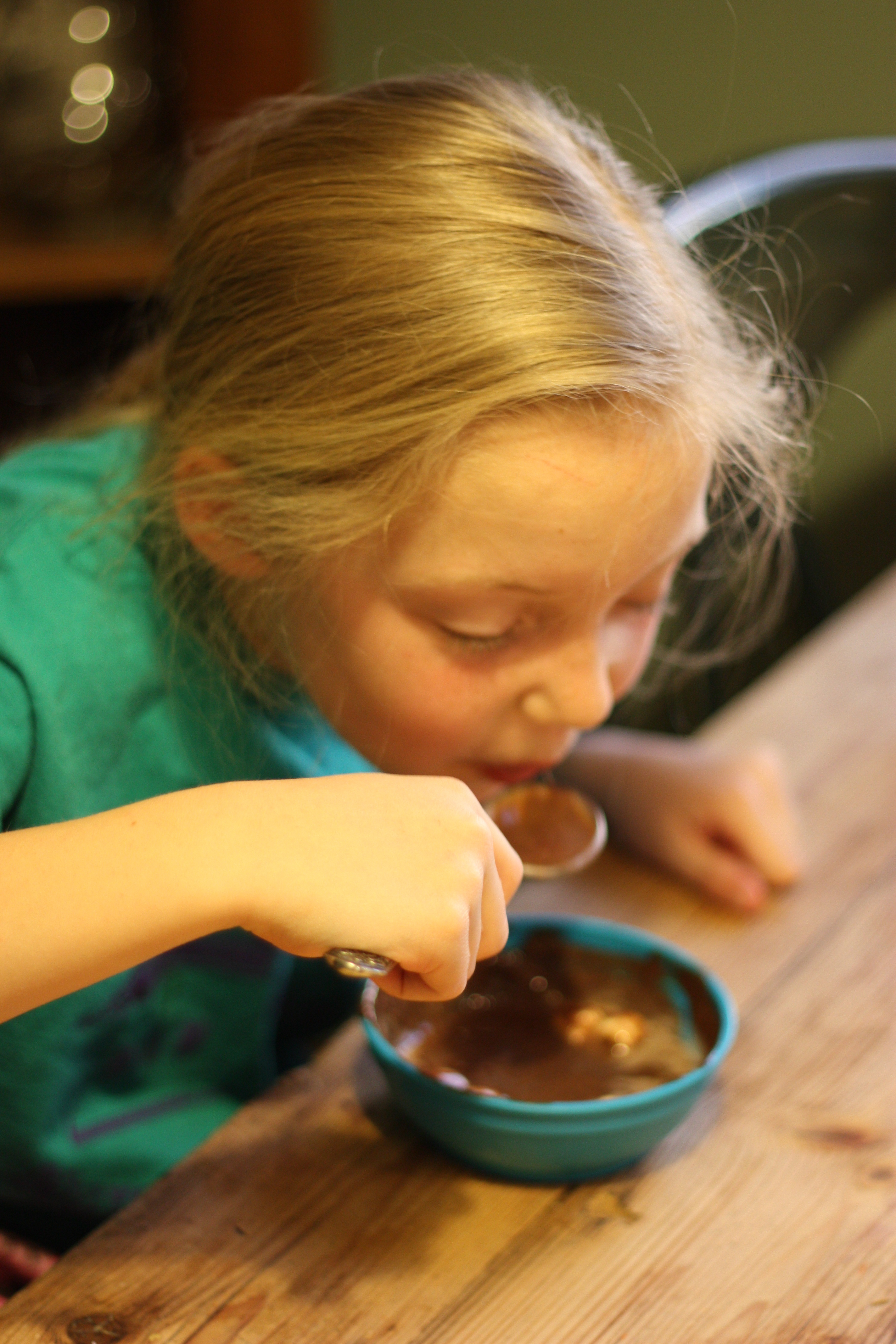
My 6-year-old Lucy asks for pudding just about every night after dinner. She typically wants tapioca, but Henry usually complains at this. Tonight, because I wanted to try this new recipe, we had chocolate, and oh my! what a pudding! After the first bite, I thought, “This recipe should definitely have the word ‘velvety’ in its name,” and then I looked back at the recipe to see that it did. So, perhaps that was subliminal, but regardless, this pudding is WONDERFUL. And simple. My two most favorite combinations.

The recipe comes from Lucinda Scala Quinn’s Mad Hungry, a really fun cookbook by Martha’s head food editor. Quinn suggests using this as a basis for a chocolate pie (great idea). The high sugar content works well if you’re using a dark chocolate powder. If using something milkier, you may like less sugar. For my family of six, I doubled it, and had just a little leftover. My kids topped it with marshmallows. It looked perfect.

Velvety Chocolate Pudding

  • 3 1/2 tablespoons all-purpose flour
  • 3 tablespoons best-quality cocoa powder
  • 1 cup sugar
  • Hefty pinch of coarse salt
  • 1 1/2 cups milk
  • 2 tablespoons unsalted butter, softened
  • 1 large egg, well beaten
  • 1 teaspoon pure vanilla extract
  • Whipped cream, for garnishing (optional)

    Henry was helping me with this awesome texture shot.

  1. In a medium bowl, whisk together the flour, cocoa powder, sugar, and salt. Press through a sieve into a medium saucepan to eliminate any lumps [I didn’t do this, and had no problem]. Whisk in the milk.
  2. Over medium heat, stir the mixture until thickened, about 2 1/2 minutes. Be sure to get the spoon around the edges of the pan as the mixture thickens. Whisk if needed to combine well. Stir in the butter.
  3. Whisk 1 tablespoon of the hot chocolate mixture into the beaten egg and return to the pudding in the pan. Stir in the vanilla and cook to completely thicken, 2 to 3 more minutes. Strain through a sieve and pour the pudding into four to six 6-ounce pudding cups. Serve warm, or cool first and chill until serving. Press plastic wrap directly on the surface of the pudding to prevent it from forming a skin (unless you like it!). Top with a dollop of whipped cream, if desired.

    Lucy gets pudding for dessert.

Black Bean and Mango Quinoa Salad

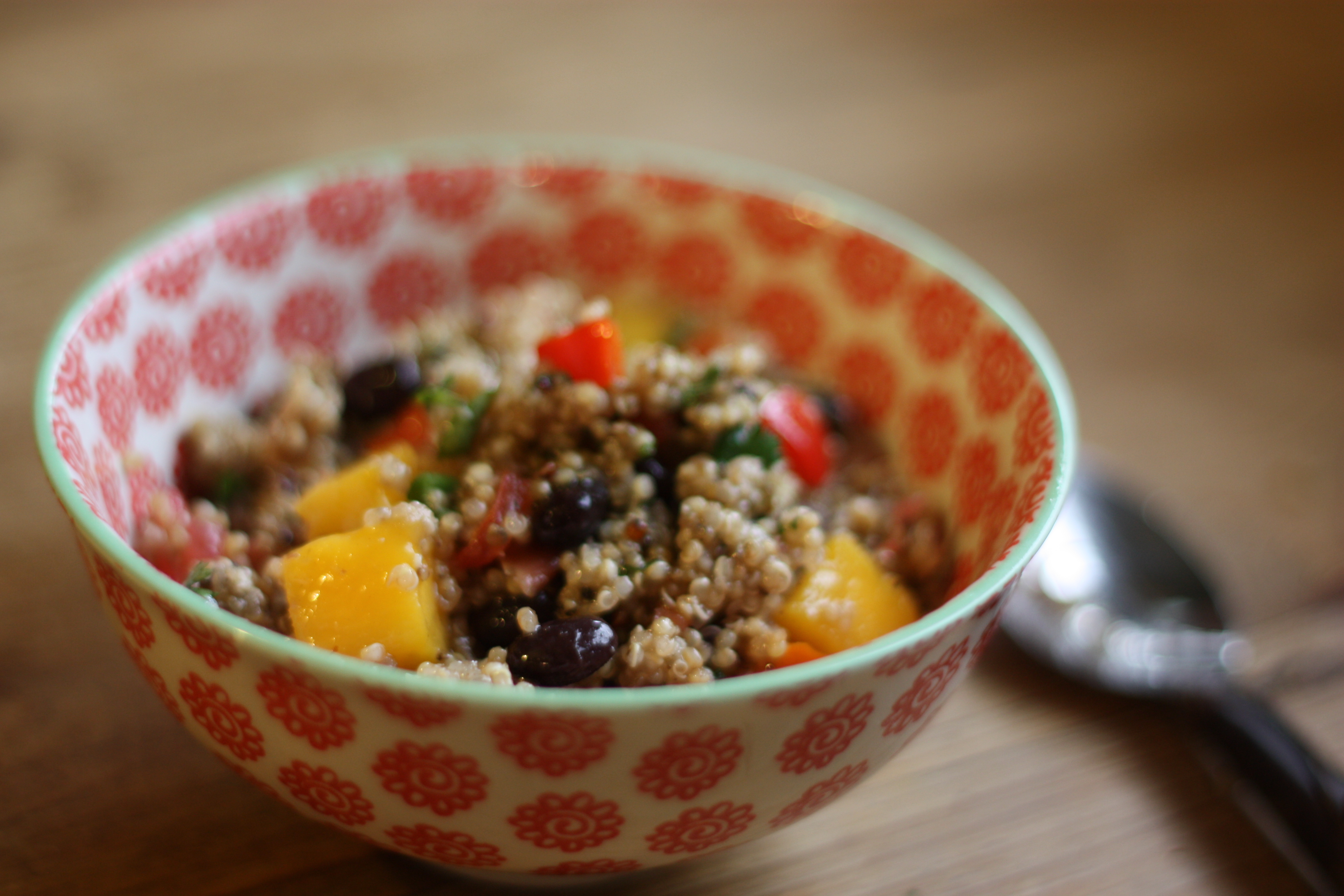
I improvised a little for a luncheon get-together last week, and came up with a new salad that is wonderfully colorful and seemed nutritionally loaded

A bright salad for spring and summer!

(as far as my knowledge of nutrition goes:). It’s also vegetarian and vegan.  I based it off of a recipe from epicurious, although the end result is quite a bit different. So, this is for Sara particularly, but if something doesn’t seem right, let me know! This is how I remember it going . . .

Black Bean and Mango Quinoa Salad

  • 1 cup quinoa (about 6 ounces)
  • 1/4 c. canola oil
  • 2 T. white wine vinegar
  • 1/2 t. cumin
  • 1/2 t. dijon mustard
  • 1/2 t. salt (or more, to taste)
  • 1 c. black beans, cooked and drained (or from a can)
  • 1 c. chopped peeled mango
  • 1 medium tomato, cored and chopped into 1/4″ cubes
  • 1 sweet pepper (orange or yellow look particularly great), seeded, deveined, and chopped
  • 3 green onions, chopped
  • 1 large handful of cilantro, stems removed, roughly chopped

Cook quinoa in medium pot of boiling salted water over medium heat until tender but still firm to bite, stirring occasionally, about 12 minutes. Drain well; cool. Transfer to medium bowl. [My quinoa gets really clumpy when I cook it this way, so instead, I boil it for 10 minutes, then I put it in a fine mesh steamer, and steam it for 10 minutes more. It turns out light and fluffy this way. I also always rinse it 3xs before cooking it, which was the excellent advice of my friend Maryann. Rinsing it ensures the quinoa’s not bitter.]

Meanwhile, whisk oil and next 4 ingredients in small bowl to blend. Season dressing to taste with more salt (if desired) and pepper.

Add chopped mango, black beans, tomato,  green onions, pepper, 1/2 the cilantro and 1/4 cup dressing to quinoa; toss to coat. Garnish with remaining cilantro and drizzle with remaining dressing; serve. Stores well for 2 days in an airtight container, refrigerated.

Serves 4-6.

No-Knead Pizza Dough

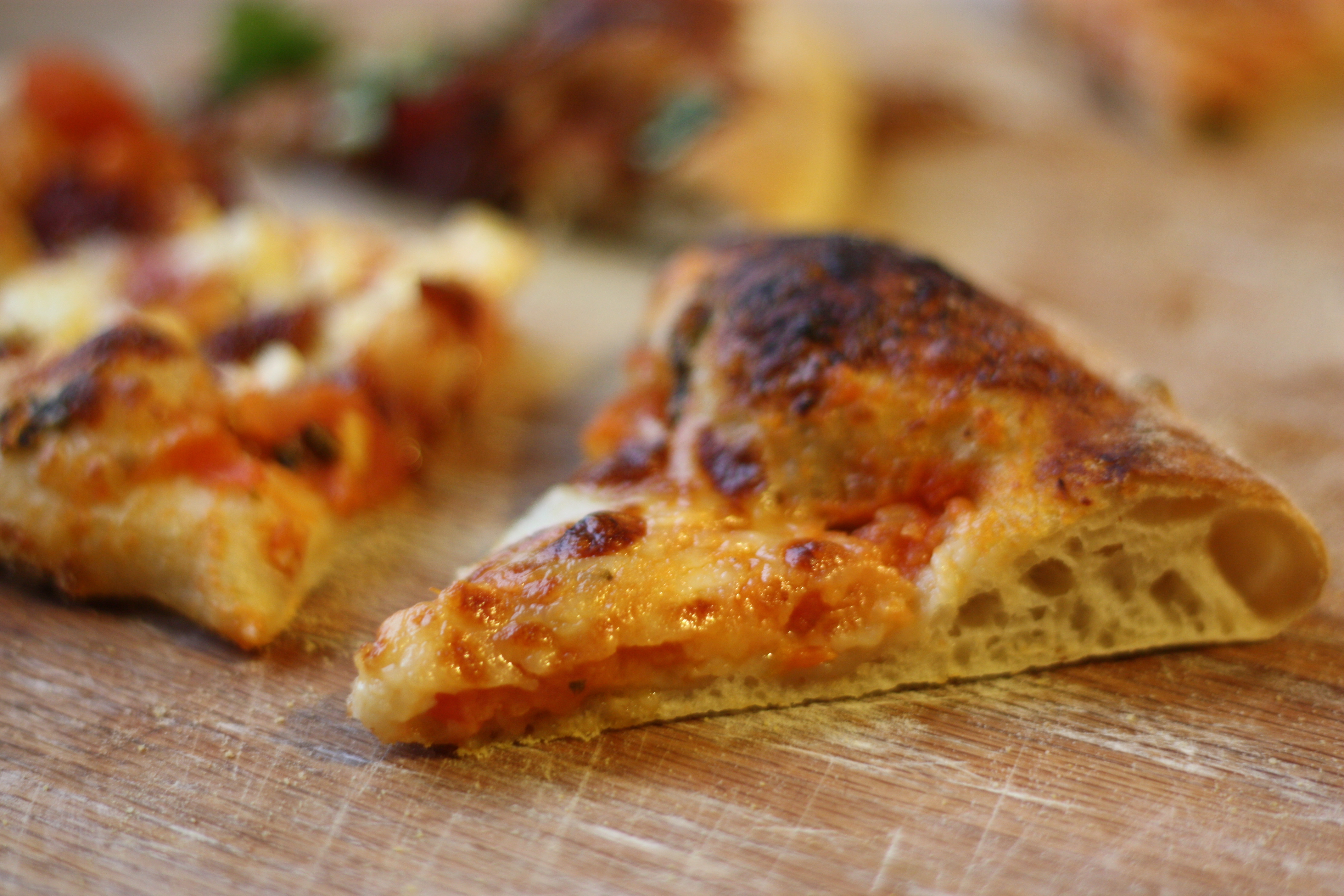
Plain cheese--but what a crust!

Plain cheese–but what a crust!

This is the pizza dough I’ve been looking for, for a long, long time. It is simple, and delicious, and I even felt brave enough to slide the dough onto the

pizza stone, from an upside down baking sheet, and let it broil away (but the first time, I cooked it on sheets, and that worked well, too). I loved the crust, and it held up well. I made it for Peter’s 4th birthday last week, and looked around after the party, only to see there weren’t any leftovers. So, I made it again last Friday. Awesome. I’m loving this dough. As Bon Appetit promised, it is chewy, bubbly, crisp on the outside and chewy on the inside. And, it couldn’t be easier to make. It comes from the March 2012 Bon Appetit magazine. Just one word: go on the sparse side with the toppings. If you’re more interested in thick toppings, try to deep-dish pizza crust instead. It works wonders for that.

No-Knead Pizza Dough

  • 7 1/2 cups all-purpose flour (1000 grams) plus more for shaping dough (can substitute up to 2 1/2 c. with whole wheat flour)
  • 4 teaspoons fine sea salt
  • 1/2 teaspoon active dry yeast

1. Whisk flour, salt, and yeast in a medium bowl. While stirring with a wooden spoon, gradually add 3 cups water; stir until well incorporated. Mix dough

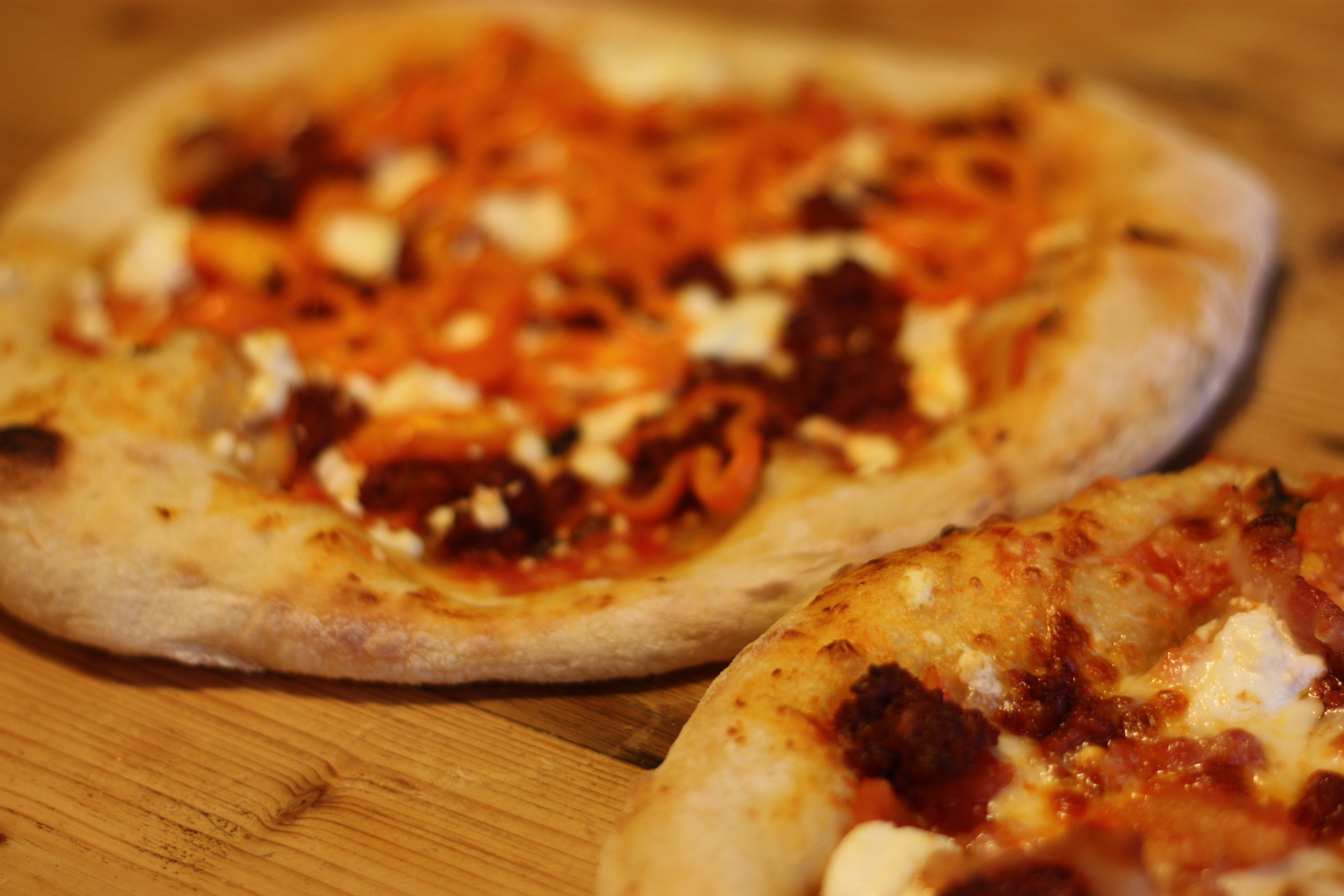
Topped with chorizo, peppers, and goat cheese

gently with your hands to bring it together and form into a rough ball. Transfer to a large clean bowl. Cover with plastic wrap and let dough rise at room temperature (about 72°F) in a draft- free area until surface is covered with tiny bubbles and dough has more than doubled in size, about 18 hours (time will vary depending on the temperature in the room).

2. Transfer dough to a floured work surface. Gently shape into a rough rectangle. Divide into 6 equal portions. Working with 1 portion at a time, gather 4 corners to center to create 4 folds. Turn seam side down and mold gently into a ball. Dust dough with flour; set aside on work surface or a floured baking sheet. Repeat with remaining portions.

3. Let dough rest, covered with plastic wrap or a damp kitchen towel, until soft and pliable, about 1 hour. DO AHEAD: Can be made 3 days ahead. Wrap each dough ball separately in plastic wrap and chill. Unwrap and let rest at room temperature on a lightly floured work surface, covered with plastic wrap, for 2-3 hours before shaping.

To make the pizzas:
During the last hour of dough’s resting, prepare oven: If using a pizza stone, arrange a rack in upper third of oven and place stone on rack; preheat oven to its hottest setting, 500°F-550°F, for 1 hour. If using a baking sheet, arrange a rack in middle of oven and preheat to its hottest setting, 500°F-550°F. (You do not need to preheat the baking sheet.)

Working with 1 dough ball at a time, dust dough generously with flour and place on a floured work surface. Gently shape dough into a 10″-12″ disk.

If using a pizza stone:
When ready to bake, increase oven heat to broil. Sprinkle a pizza peel or rimless (or inverted rimmed) baking sheet lightly with flour. Place dough disk on prepared peel and top with desired toppings.

Using small, quick back-and-forth movements, slide pizza from peel onto hot pizza stone. Broil pizza, rotating halfway, until bottom of crust is crisp and top is blistered, 5-7 minutes.

Using peel, transfer to a work surface to slice. Repeat, allowing pizza stone to reheat under broiler for 5 minutes between pizzas.

If using a baking sheet:
Arrange dough disk on baking sheet; top with desired toppings. Bake pizza until bottom of crust is crisp and top is blistered, about 10 minutes. Transfer to a work surface to slice. Repeat with remaining pizzas.

Chocolate Dump-It Cake

Such a homely name for such a wonderful cake! I tried this cake the other night when everyone was asking for a dessert, and I wanted something I could make

Not the greatest picture, but hopefully it gives you an idea of how dense and moist this great chocolate cake is.

fast. I’m so happy with it! What a wonderful, simple cake. The author, Amanda Hesser, adapted this recipe from her mother, and published it in The Essential New York Times Cookbook. For her family, it was the birthday cake. She calls it “bouncy” and “moist;” I don’t know that I’ve ever heard a cake called bouncy before, but you know, it actually fits! The recipe calls for a frosting, but our family devoured the whole thing before I made the frosting–this is one cake that doesn’t require frosting at all (just a dusting of powdered sugar would be fine), although I can’t wait to try it, too!

Chocolate Dump-It Cake

2 c. sugar
4 ounces unsweetened chocolate
1/2 c. unsalted butter (1 stick), plus more for greasing the pan
1 c. water
2 c. all-purpose flour, plus more for dusting the pan
2 t. baking soda
1 t. baking powder
1 t. salt
1 c. milk (whole is best)
1 t. cider vinegar [gives the cake such a beautiful hue!]
2 eggs
1 t. vanilla extract

For the Frosting
1 1/2 cups Nestle semi-sweet chocolate chips
1 1/2 cups sour cream, at room temperature

1. Preheat the oven to 375 degrees, and place a baking sheet on the lowest rack, to catch any drips when the cake bakes. Put the sugar, unsweetened chocolate, butter and 1 cup of water in a saucepan. Place over medium heat and stir occasionally until all of the ingredients are melted and blended. Remove from the heat and let cool slightly, 15 to 20 minutes.

2. Meanwhile, sift together the flour, baking soda, baking powder and salt. In a small bowl, stir together the milk and vinegar (it’s okay if it curdles). Grease and flour a 9-inch tube or bundt pan. (If you prefer, you can grease it, line it with parchment and then grease and flour it. This is not necessary, but parchment does make getting the cake out easier.)

3. When the chocolate in the pan has cooled a bit, whisk in the milk mixture and eggs. In several additions and without overmixing, whisk in the dry ingredients. When the mixture is smooth, add the vanilla and whisk once or twice, to blend. “Dump” the batter into the tube pan and bake on the middle rack until a skewer inserted in the center comes out clean, about 30-35 minutes. Let the cake cool for 10 minutes, then remove from the pan and cool on a rack. (This can be tricky, so if someone is around, enlist them to help. Place a ring of wax paper on top of the cake so you have something to grab onto when turning it out–it may break in half.) Let cool completely.

4. Meanwhile, for the frosting, melt the chocolate chips in a double boiler, then let cool to room temperature. It is very important that the chocolate and sour cream be the same temperature, otherwise the icing will be lumpy or grainy. (Test it by stirring a little of the sour cream and chocolate together in a bowl; if it mixes smoothly, it’s ready.) Stir in the sour cream, 1/ 4 cup at a time, until the mixture is smooth. Taste some! It’s good.

5. When the cake is cool, you may frost it as is or cut it in half so that you have two layers (when I do this, I use 2 cups chocolate chips and 2 cups sour cream). My mother uses any leftover icing to make flowers on top. She dabs small rosettes, or buttons, on top, then uses toasted almond slices as the petals, pushing them in around the base of the rosette.

Makes 10 servings. (My mother kept it in the fridge, and it is sublime even when cold.)